Church Building
“Ideally, the church should be a place for prayer, where silence, the atmosphere generated by hundreds of prayerful people through the ages, the décor and furnishings all perform their function of leading man to God.”
Extract from a letter written in the October 1974 edition of the Parish Magazine by the Revd Stephen Venner (Vicar, 1974-1976).
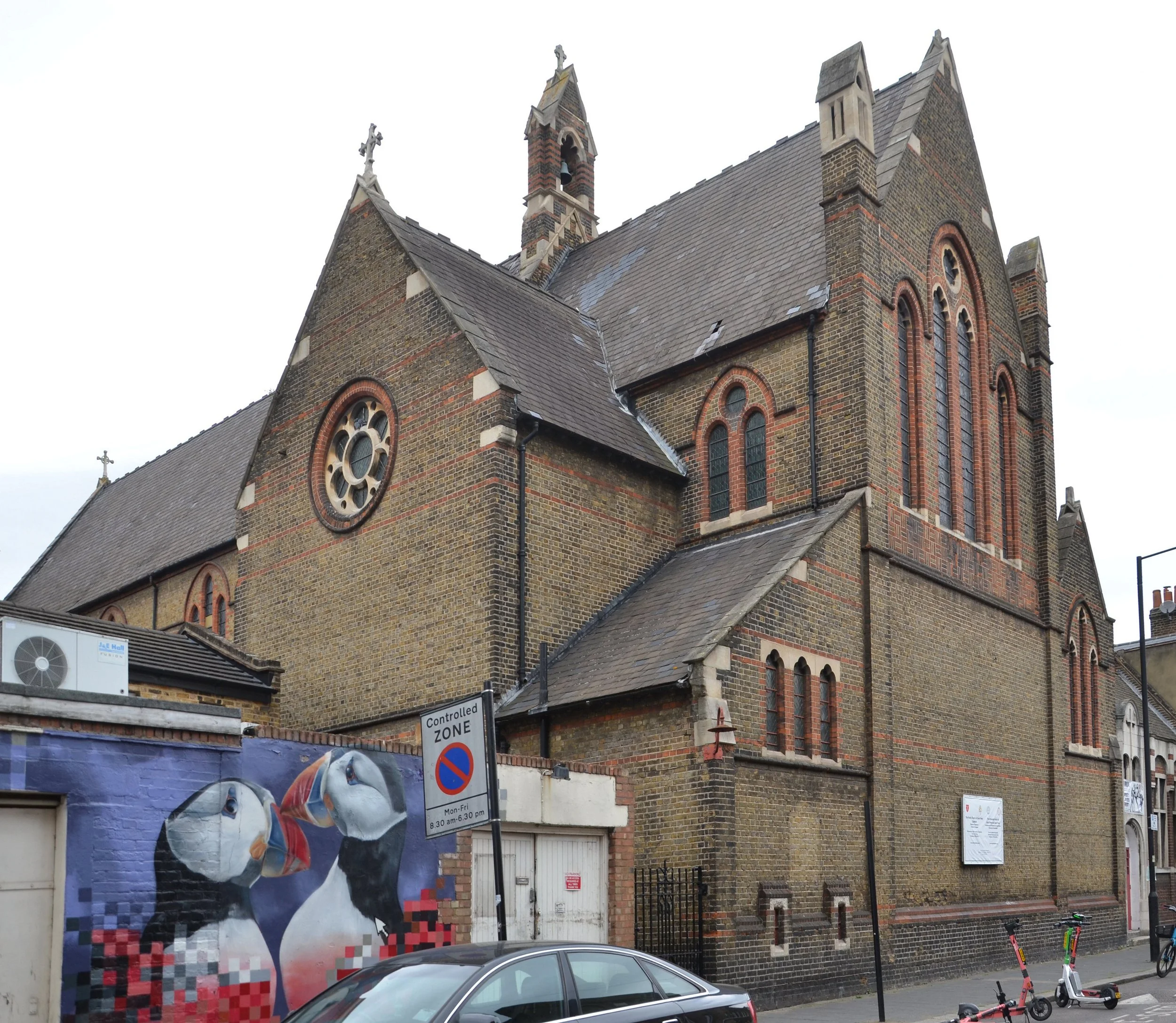
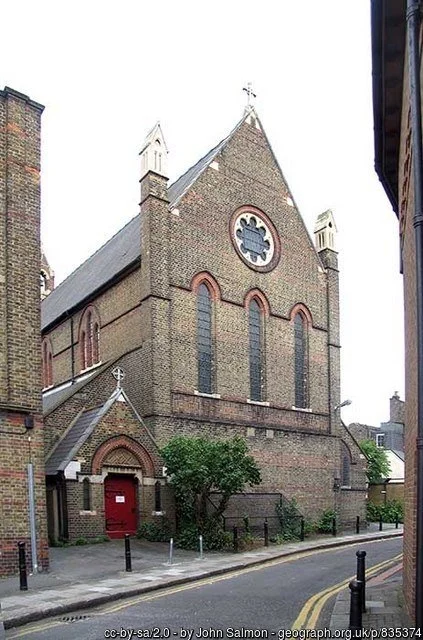
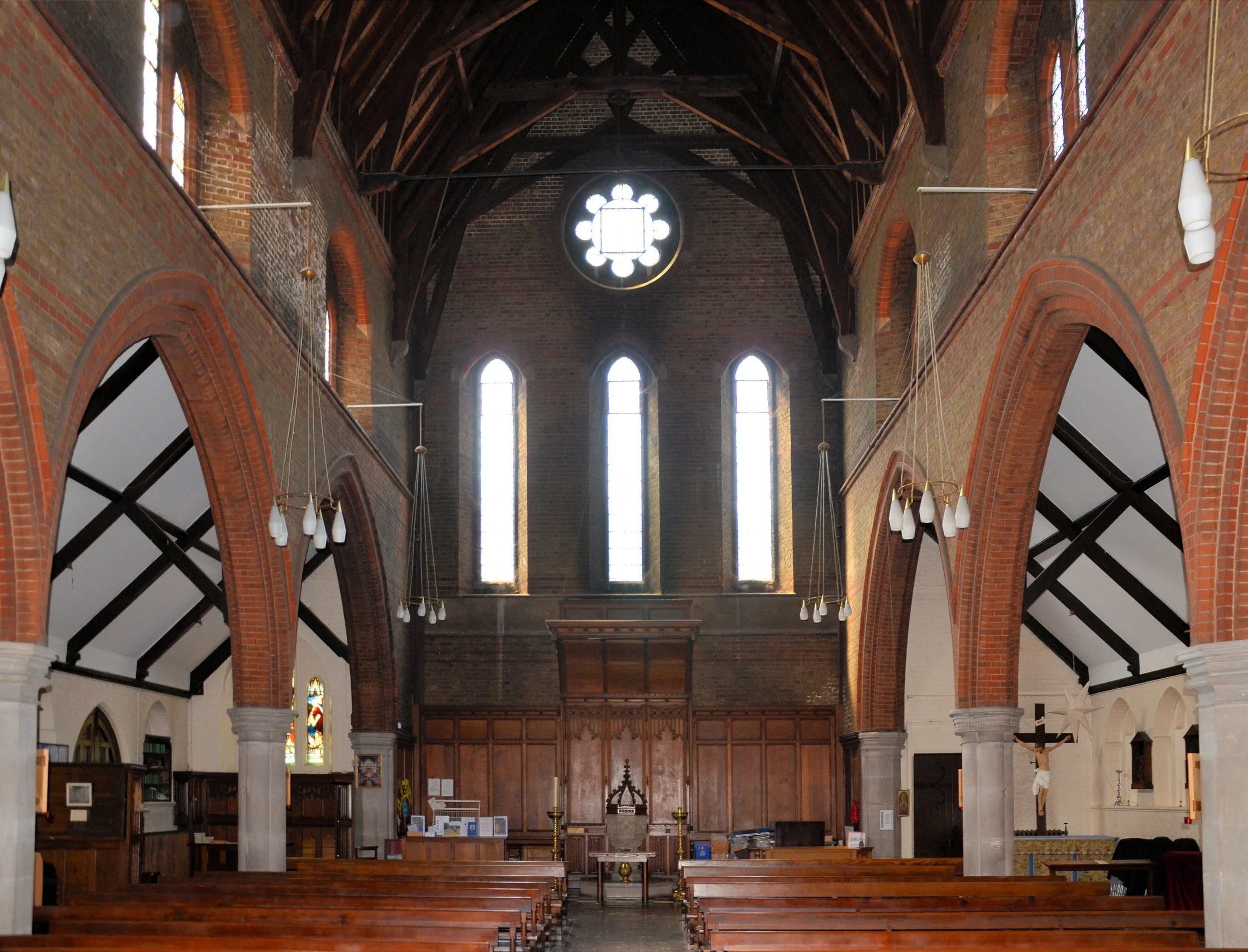
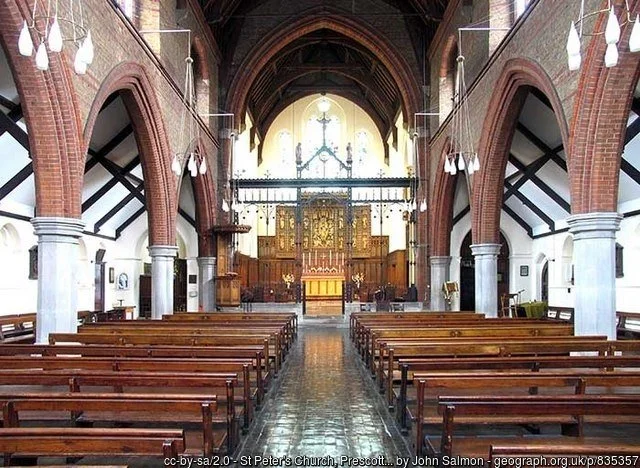
The church was not always as it appears today and before progressing round the building, a few notes on the history of St Peter’s may be of some interest.
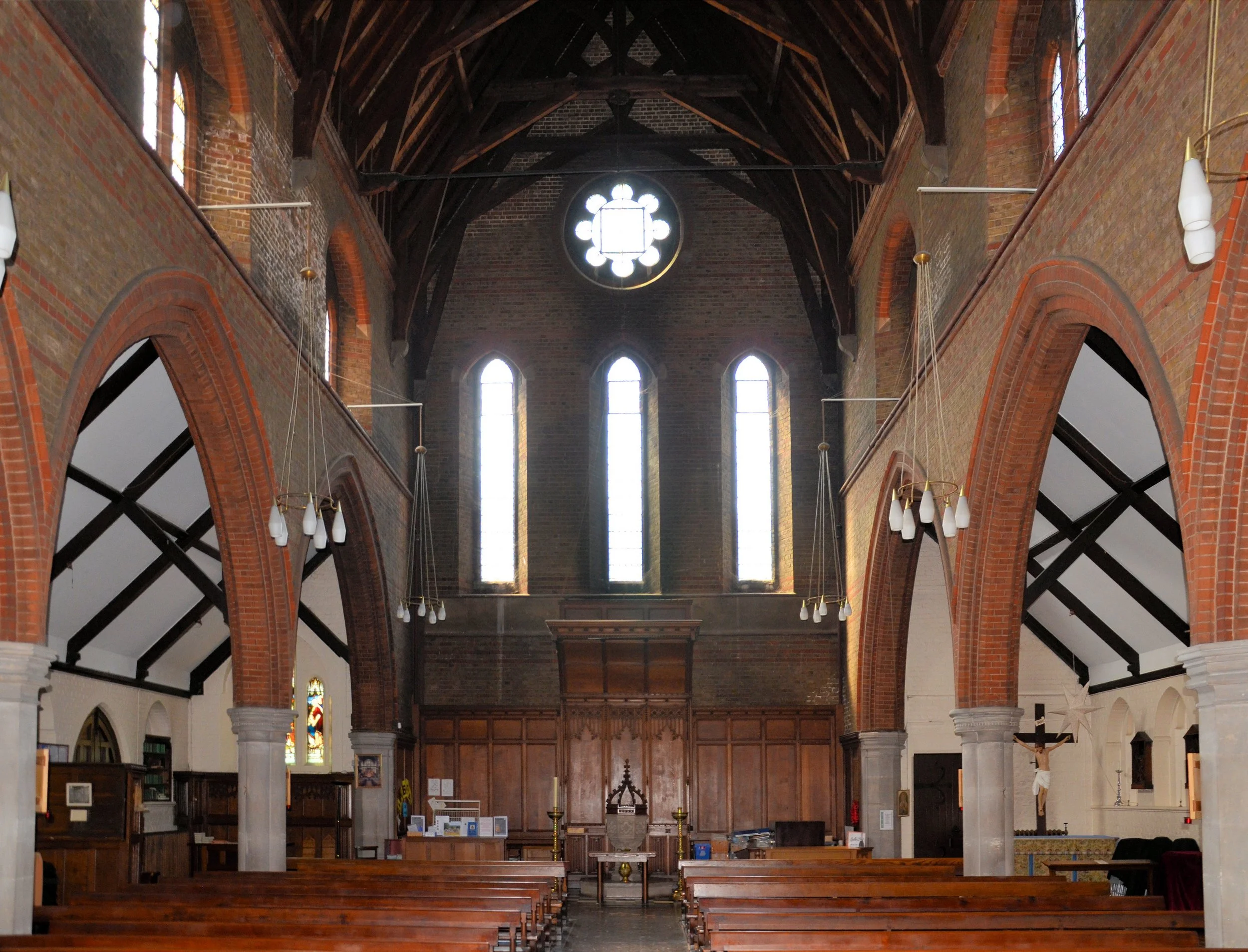
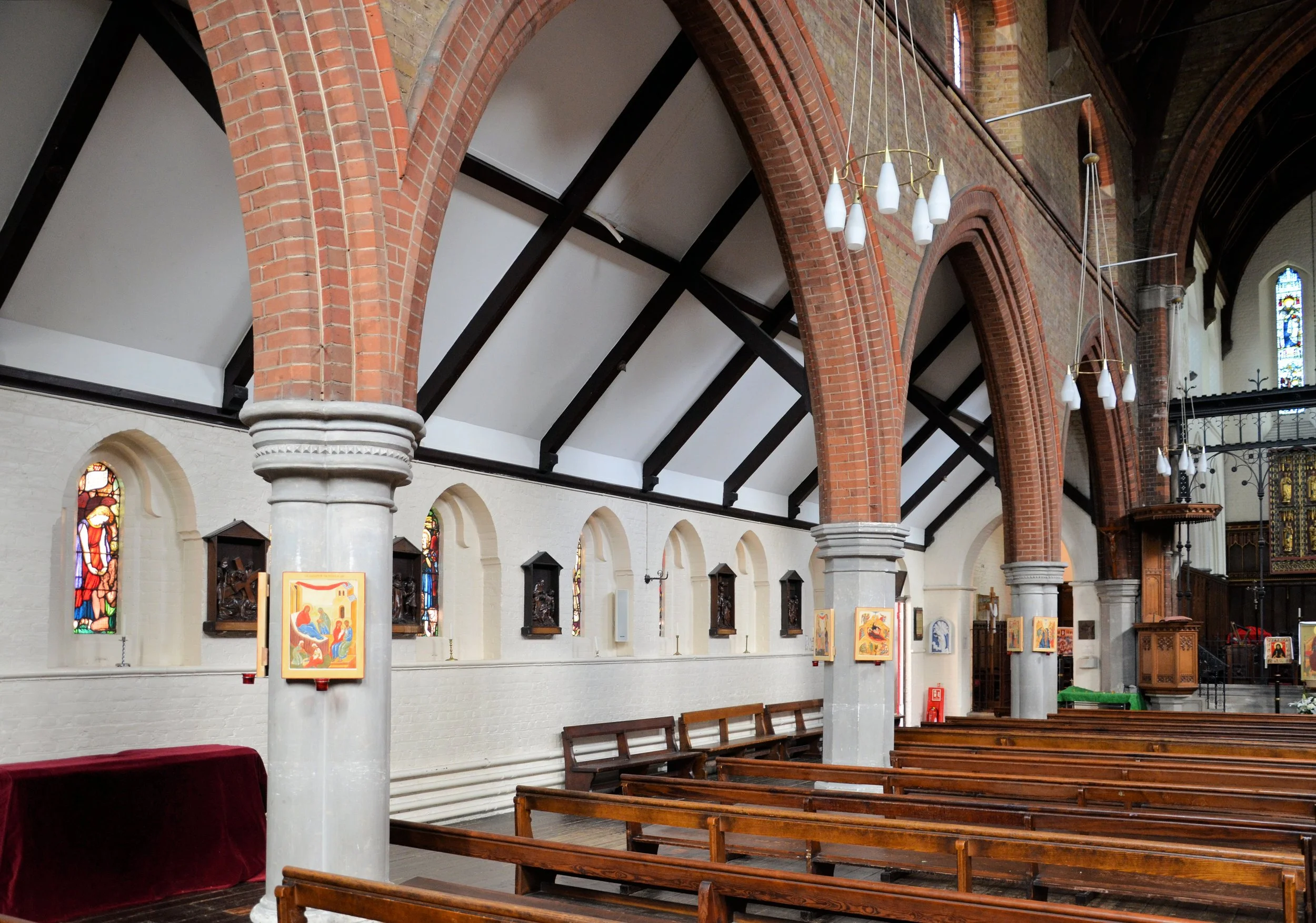
In 1877 the Revd Fitzwilliam Bowyer, Rector of Clapham and Lord of the Manor, gave the land between Clapham Manor Street and Little Manor Street (now Prescott Place), on which, subsequently, this church was built. A visitor to Clapham a year or so later would have seen on the site, as a result of many prayers and a liberal response to the Rector’s appeal, a small brick building, covered with a corrugated iron roof, consisting of what are now the three western bays of the Nave, up to the base of the Clerestory.
At that time Clapham was in the Diocese of Rochester. St Peter’s was set apart for Divine Worship by the Bishop of Rochester (Bishop Thorold) on the Wednesday before Advent Sunday 1879. By the end of 1880 a fourth bay had been added and fitted with a raised platform to serve as Choir and Sanctuary. The total cost of this part of the church was about £2,500. By 1902 the Chancel, Lady Chapel, Organ Transept and Gallery, and new Priest’s Vestry were completed. The designer was Cutts. Only two years later saw the building complete as you see it today.
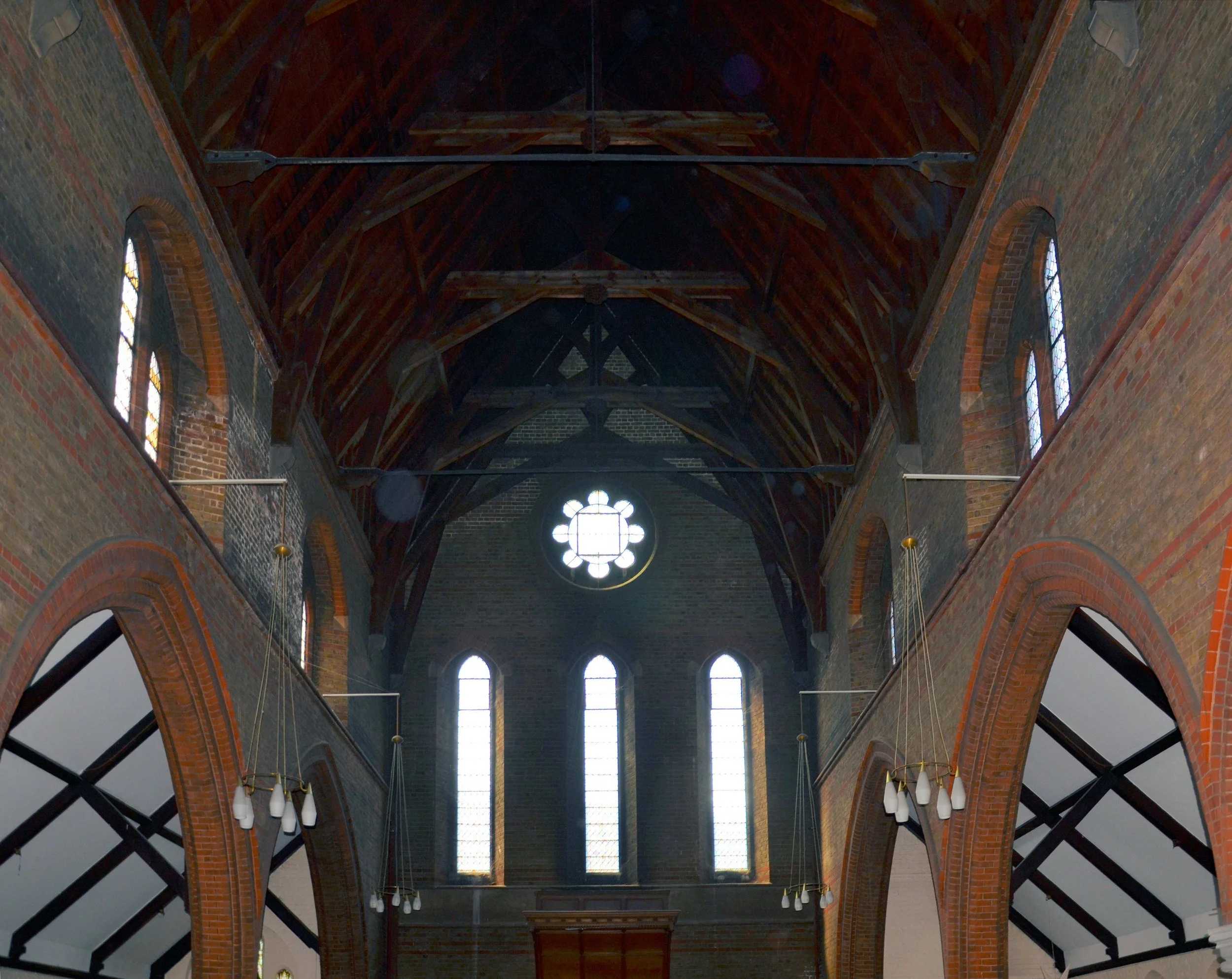
Over the next 15 years or so much of the interior was added to the building including the wrought iron Chancel (Rood) Screen with gates surmounted by a carved wooden Rood with attendant figures carved by Hitch.
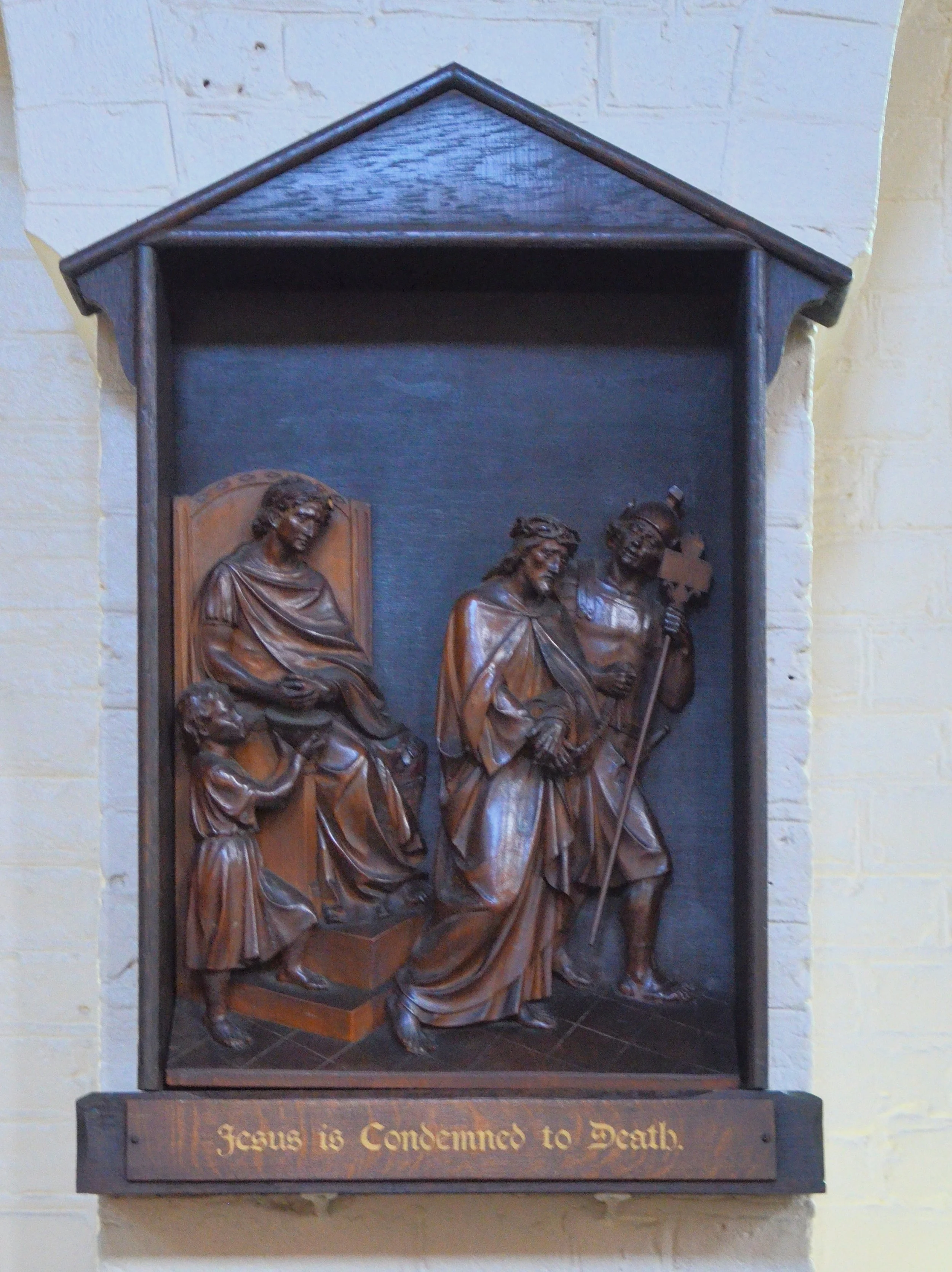
The 14 Stations of the Cross were subscribed for by the congregation and placed in the church in March 1911. They were carved by a Bavarian artist in the Austrian Tyrol.
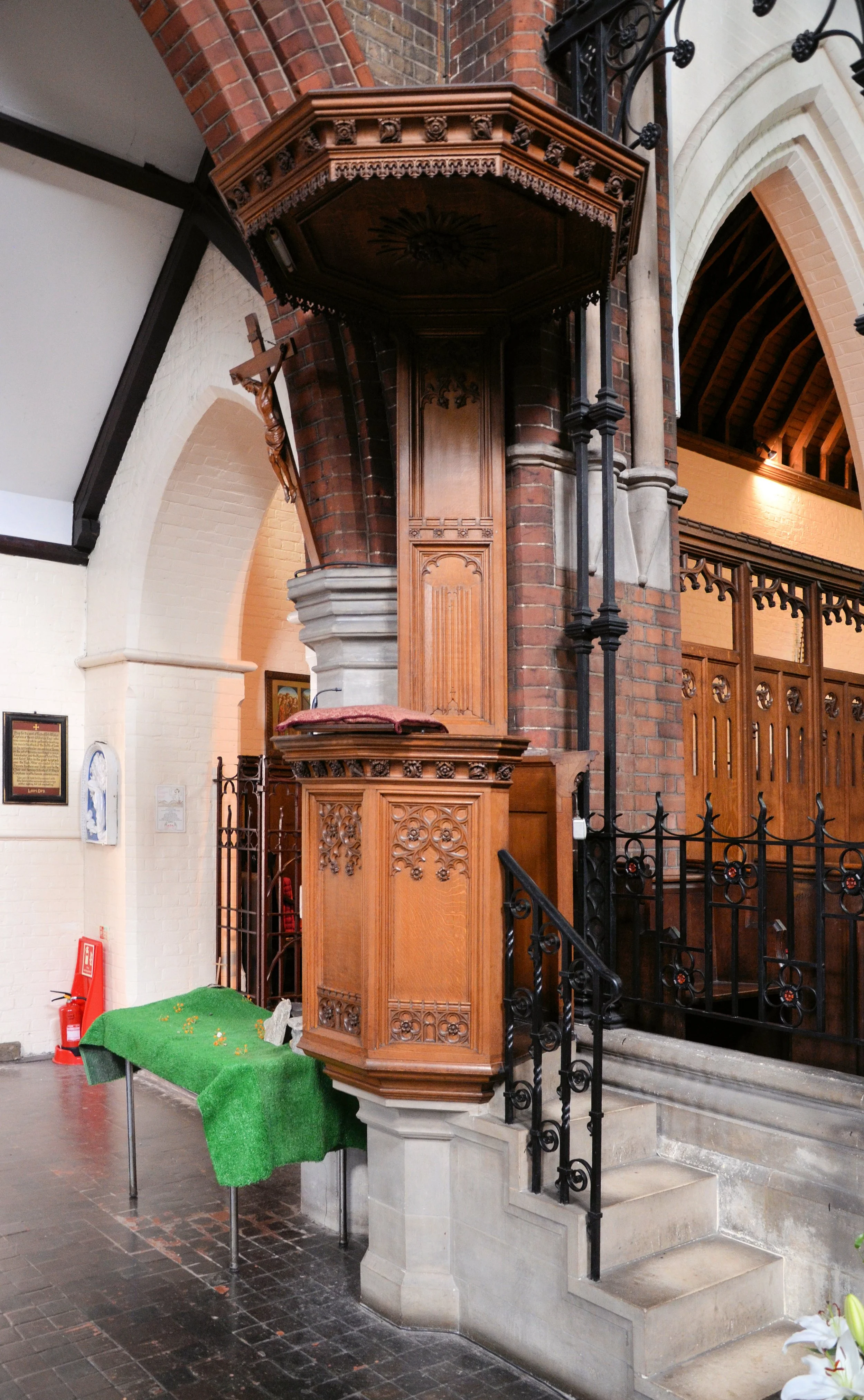
The Pulpit was installed in 1913 and replaced the previous one which was placed in the Church of the Holy Spirit, Narbonne Avenue, Clapham.
The South Aisle
The Brass Lectern was given by the Choir in 1897. The top part swivels round so that two readings can be prepared for immediate viewing (and reading).
Adjacent is a plaque showing the Last Supper in raised coal in wood surround, given by Beryl Hooton-Fox.
The Chancel
On either side of the Chancel Gates are scenes from the life of St Peter the Apostle painted on medallions.
The Organ Gallery housing a Hunter Organ, comprising “Great”, “Choir”, “Swell” and Pedal. Originally the Organ was smaller and was situated where the piano is currently located near the Lectern. The Organ was enlarged and moved to its present location during the 1920s. Beneath the gallery, there is oak panelling in memory of Canon Noel Percival Tower, first Vicar of St Peter’s.
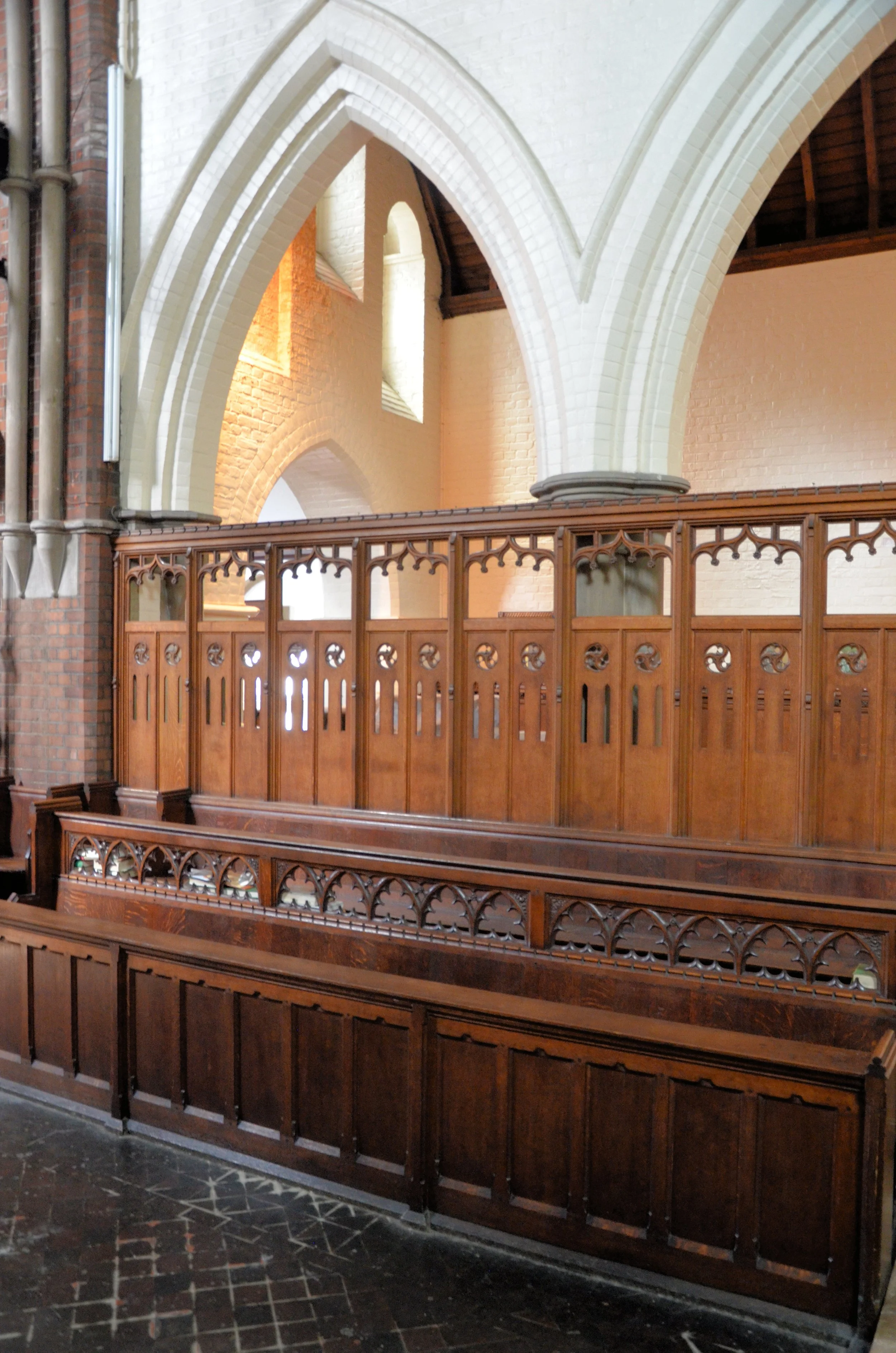
On entering the Chancel are found the oak choir stalls and Priest stalls with panel front and book rests and carved and pierced front with book rests, with two seats on either side. On the north side between chancel and Lady Chapel is an oak screen, incorporating oak panels and tracery.
Located at the end of the choir stalls – on the north side – is the Processional Cross with a bronze figure of Our Lord on an oak shaft. This Cross is used on the ordinary Sundays of the year. The Cross shows signs of war damage and was repaired in 1982 by Watts & Co Westminster. Another Processional Cross replaces this one on Major Festivals.
Separating the Chancel from the Sanctuary are two oak communion rails – fixed.
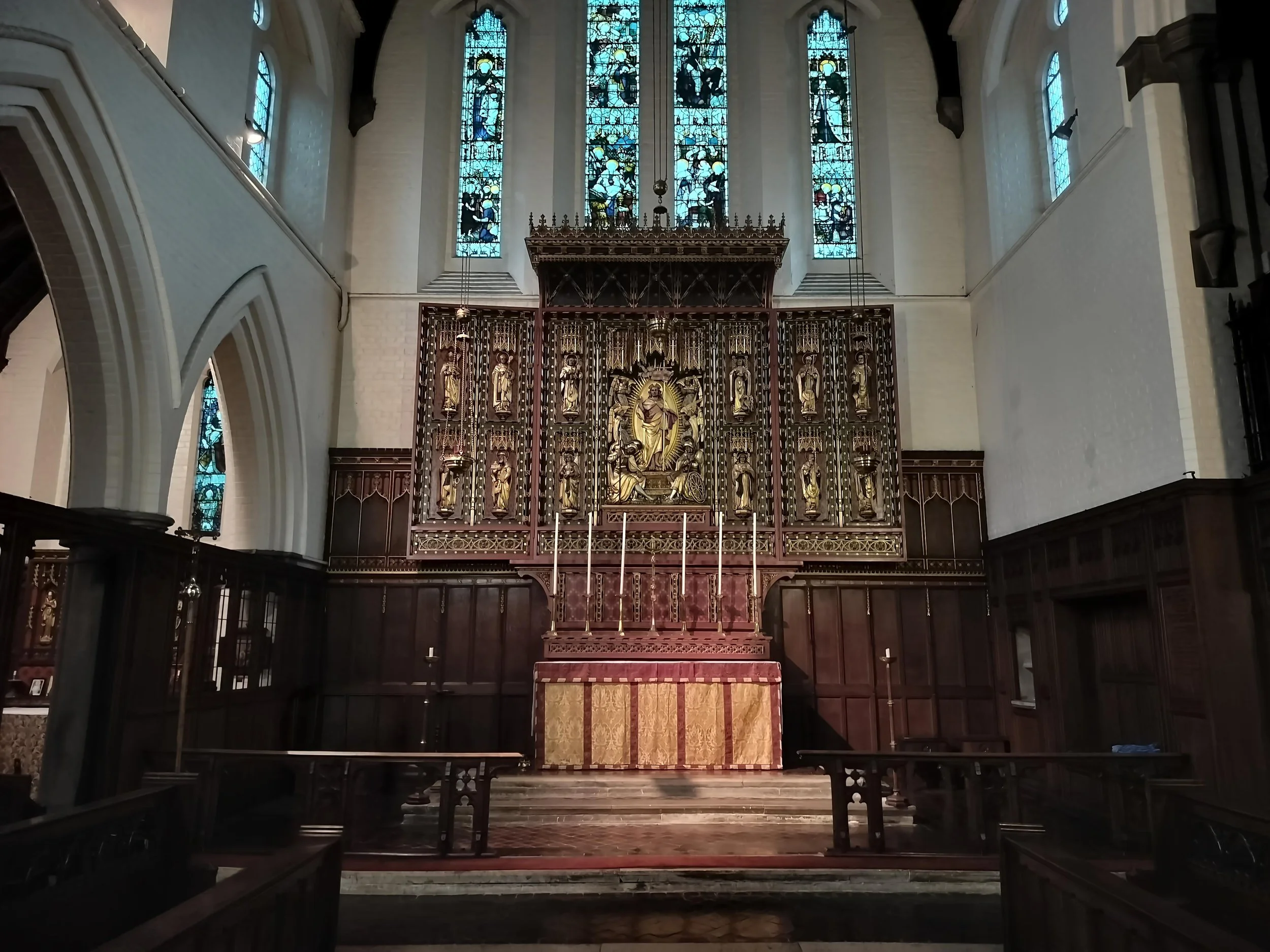
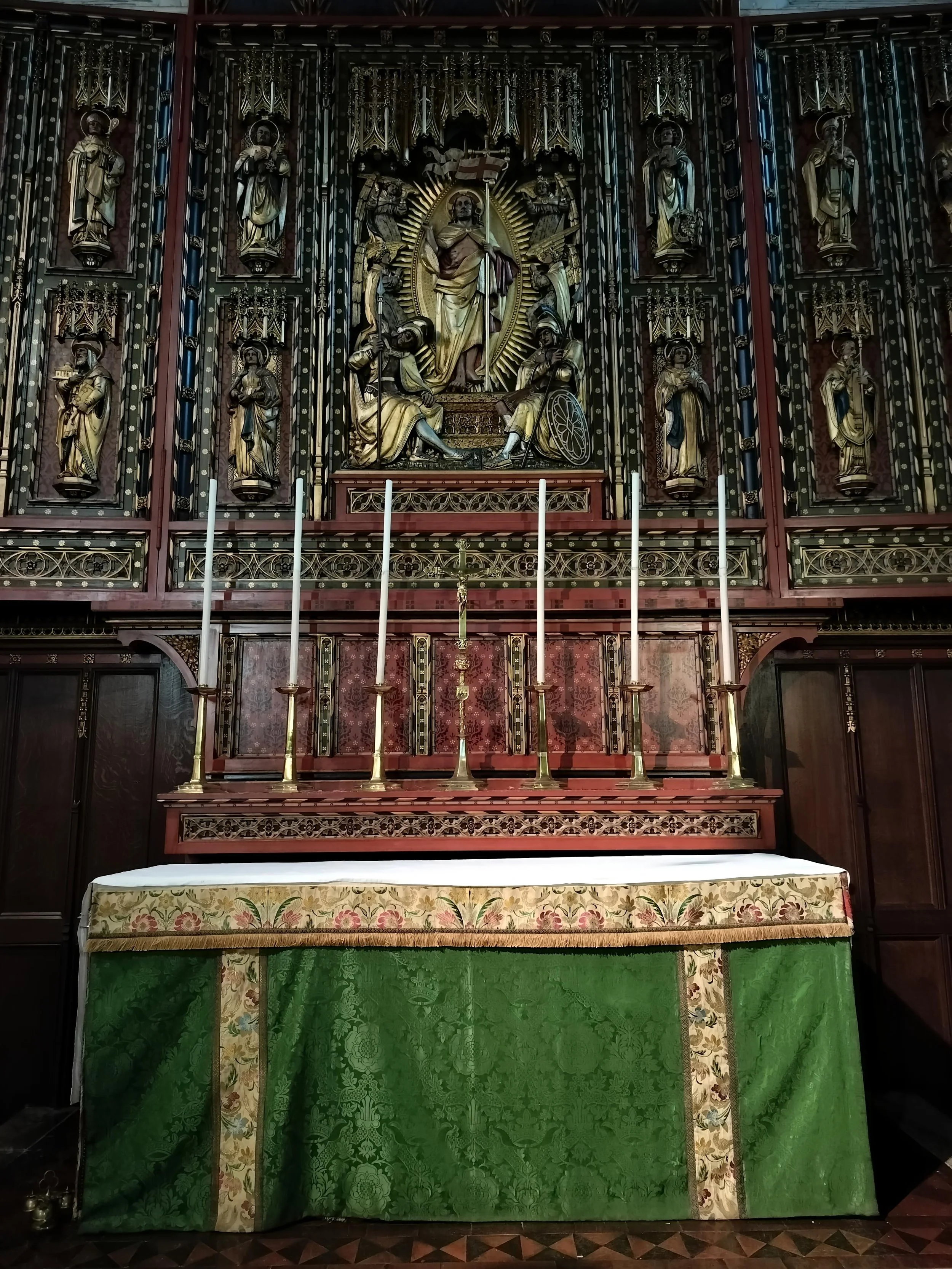
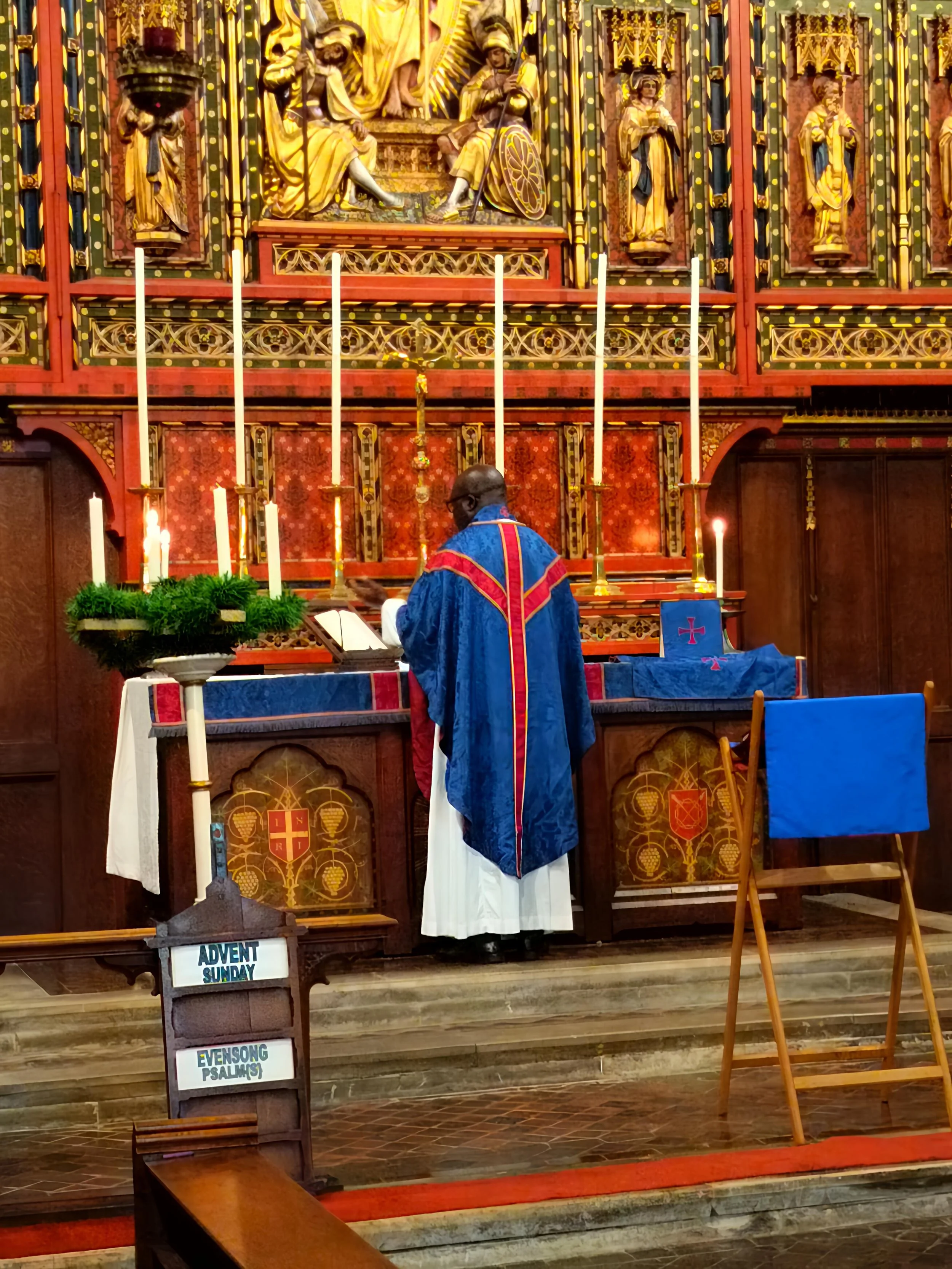
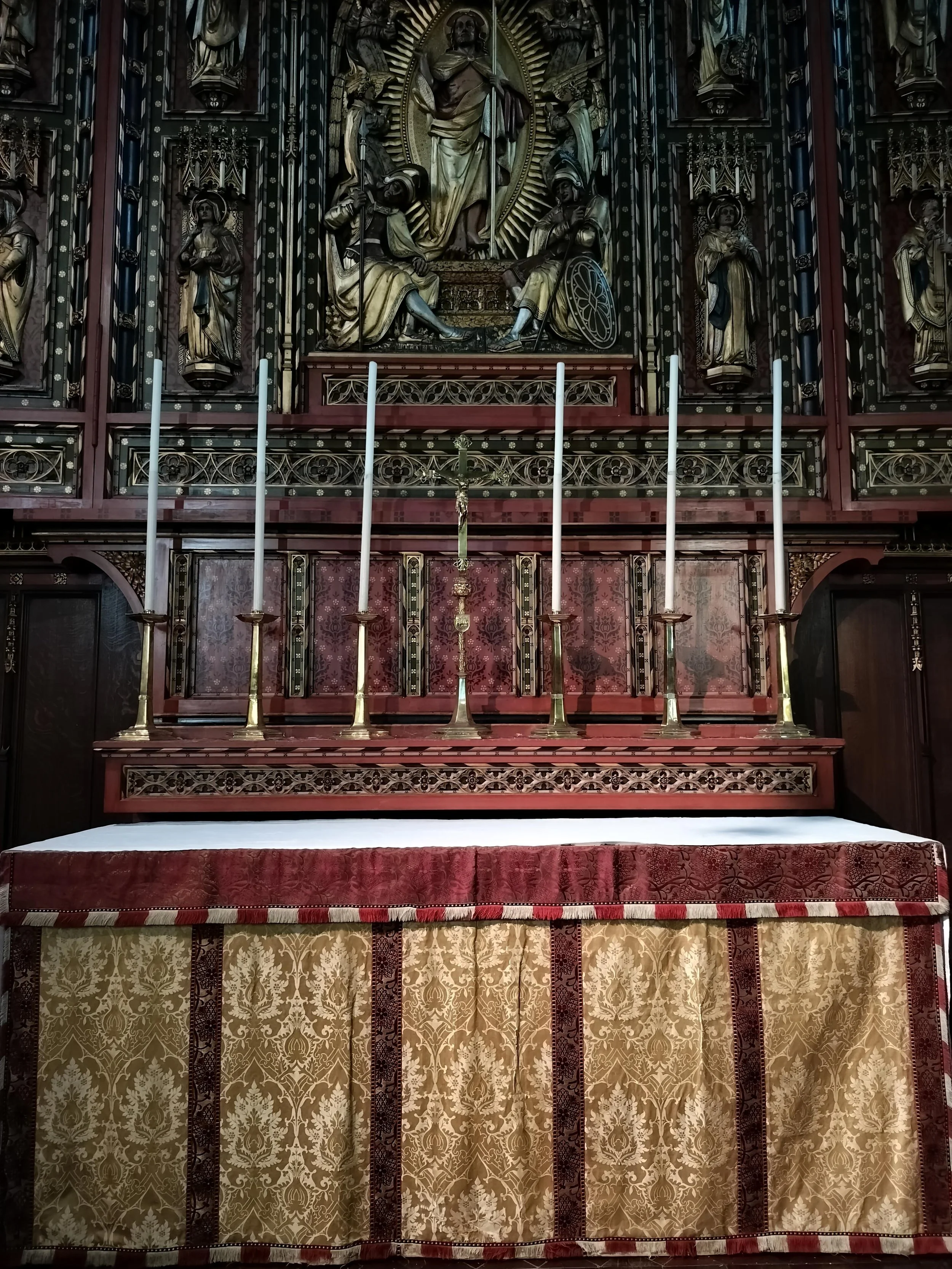
The High Altar is the principal item of furniture on the church. Normally, frontals hang showing the colour of the season or festival being celebrated. It is one of the very few items left from the original building and is carved in oak with three-panels from painted-in panels and inset in the top with five crosses in cedar wood from the Holy Land. Even with the mighty reredos above, the final design of this church focuses on this altar.
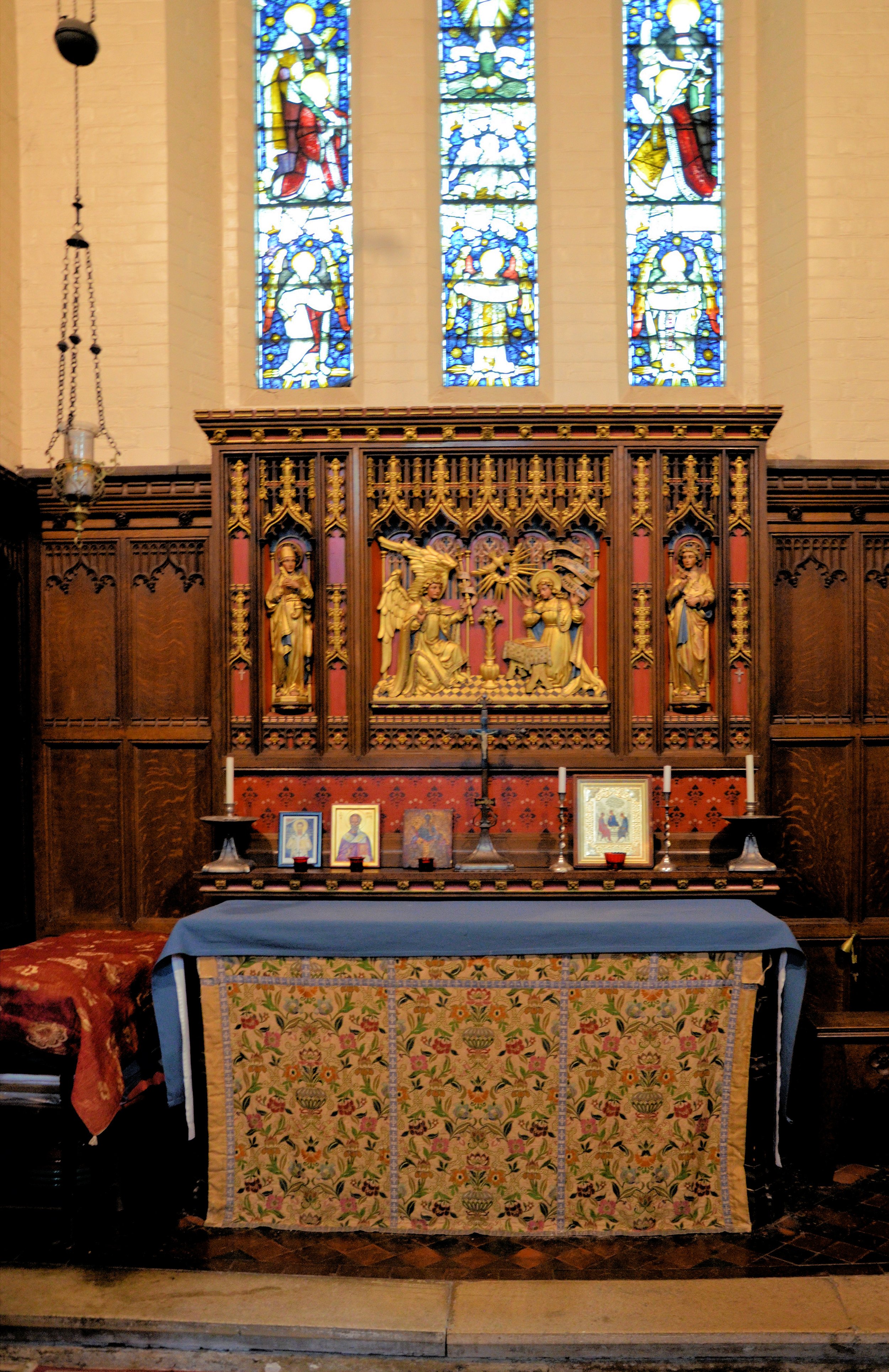
To the north and south of the altar on the east wall is coloured and gilded oak panelling. The panelling of oak surrounding the credence and sedilia is in memory of Canon Tower.
Above your head three brass sanctuary lamps are suspended from the roof. Initially, there were seven lamps. During the second world war three were given to St John the Divine, Kennington and one to St John the Evangelist, Clapham when these churches were restored following bomb damage.
Raised above the High Altar are six brass candlesticks and matching standing crucifix.
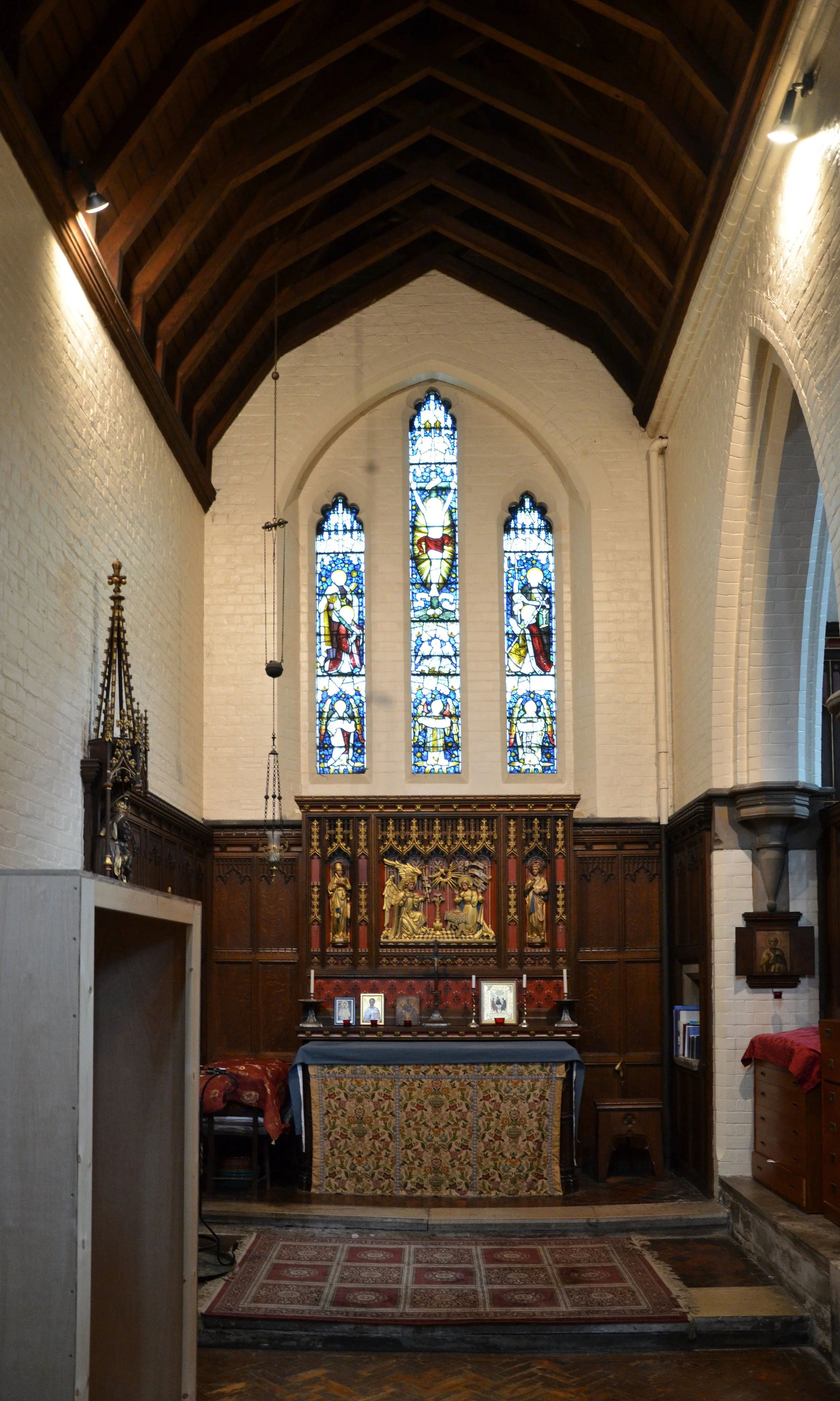
Lady Chapel
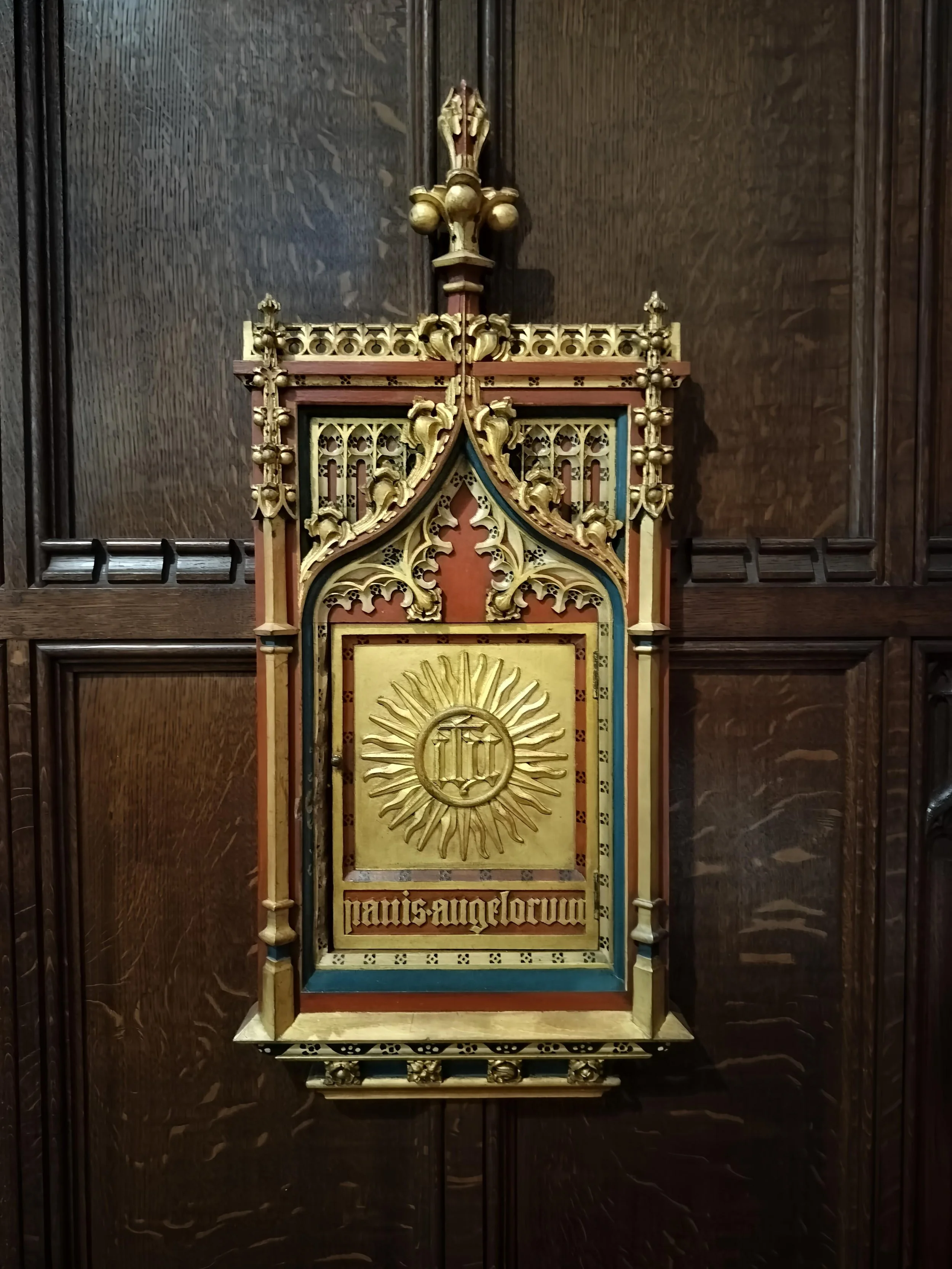
The Lady Chapel contains some very fine and unusual items, but first we would remind you that the Blessed Sacrament is reserved in this Chapel (under the burning white light) in the Aumbry of which the outer door is carved oak, ornamented gilt with IHS monogram surrounded by rays of light. Unfortunately, this door was damaged by vandals in 1974.
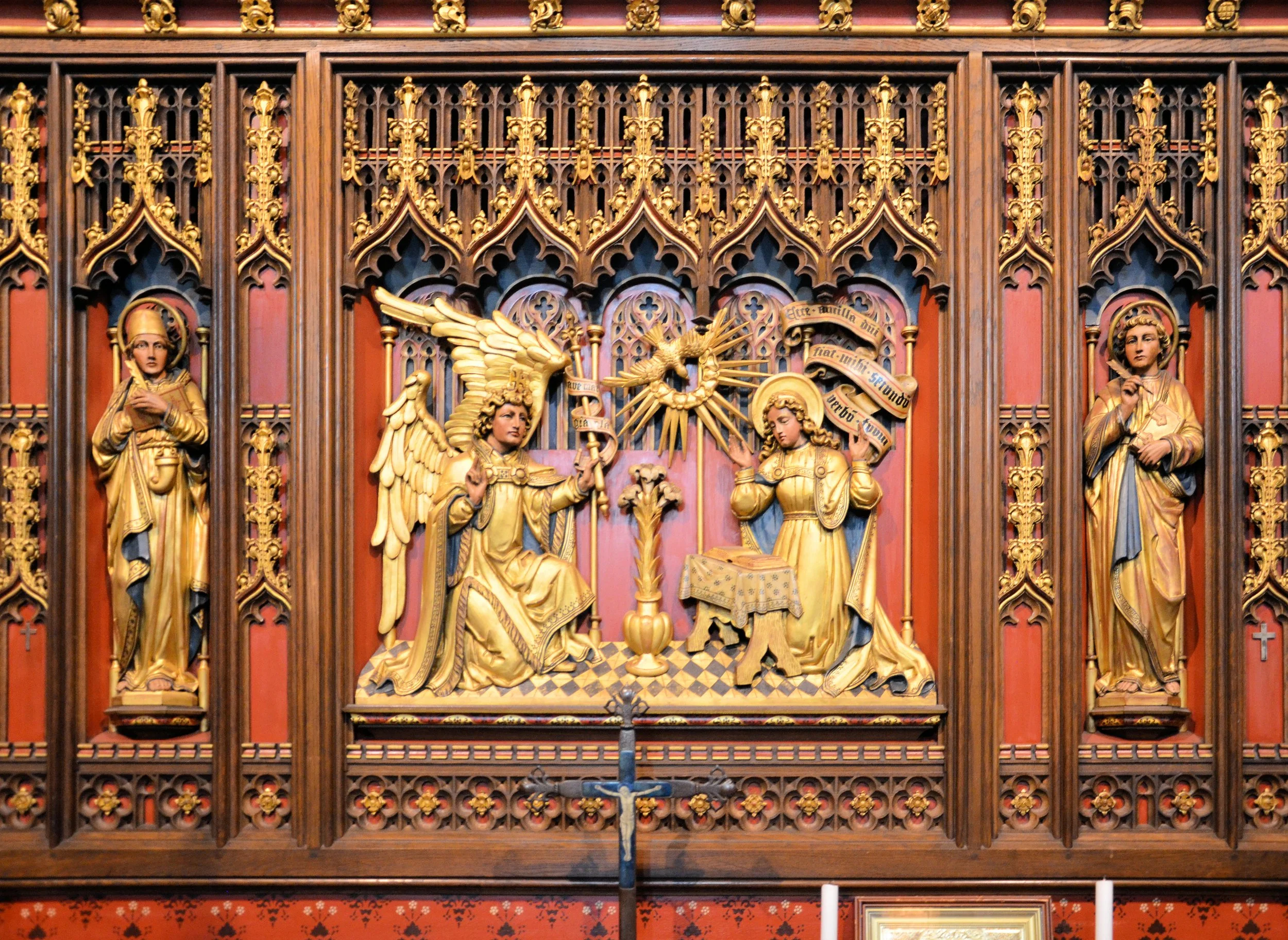
The small Reredos is carved oak, gilded and ornamented in Red: centre panel represents the Annunciation of Our Lord to Our Lady, with the side figures of St John and St Luke. The Reredos is in memory of the Revd AHM Peat, Assistant Priest and Organist 1911-1923.
To the right of the Chapel is a Greek icon in oils of St Nicholas on a dark oak and decorated panel, which was a gift of the Revd Philip Bacon.
The oak panelling along the north side of the Chapel includes a carved statue of Our Lady and Holy Child, partly gilded, on an oak pedestal, surmounted by a gilded canopy. The panelling and statue was given in memory of the Revd CA Walton, one-time Assistant Priest, who was killed on 31 Mary 1916 at the Battle of Jutland whilst serving on HMS Chester.
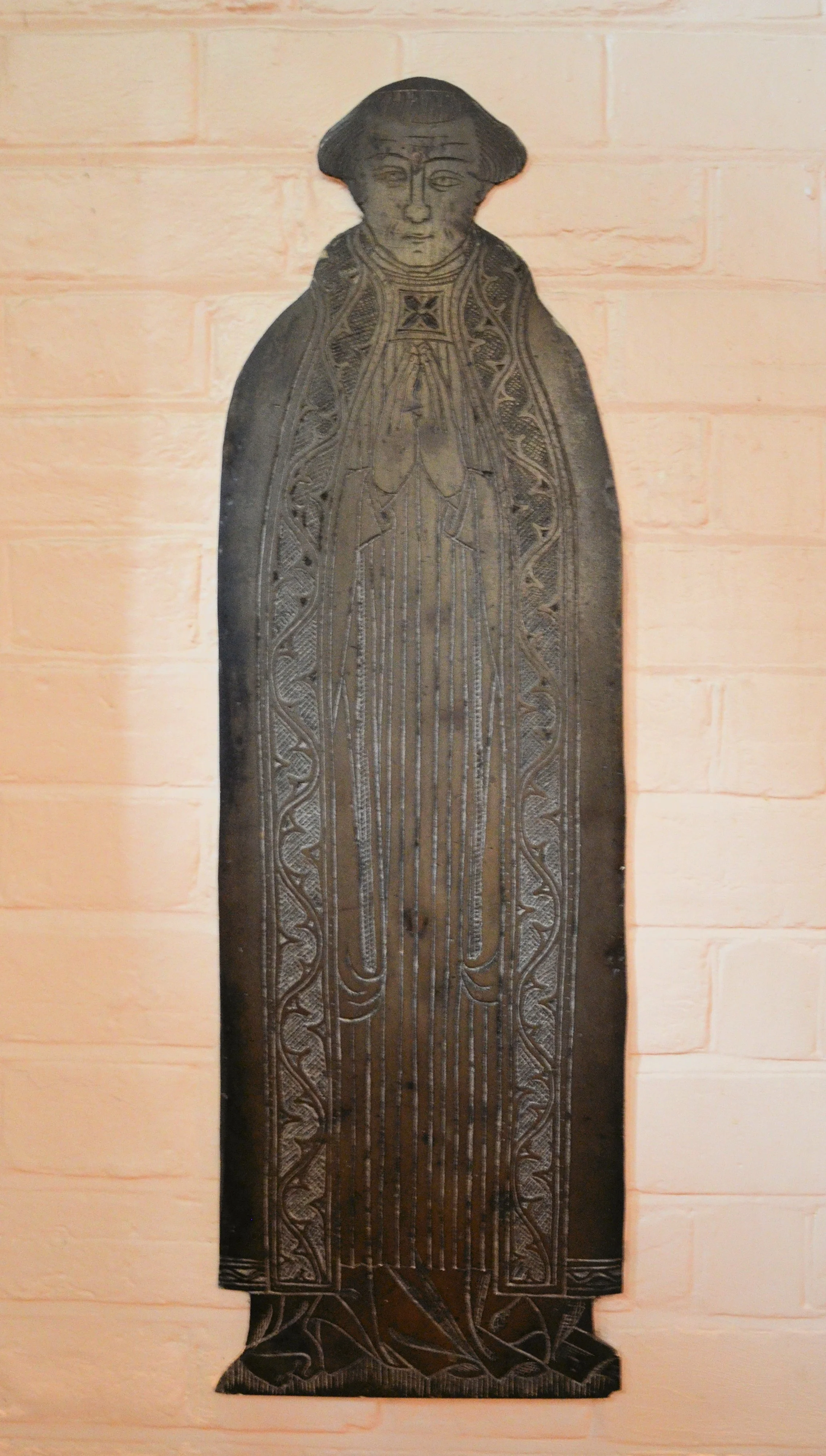
As you leave the Chapel, on the left wall facing there is a brass of a Priest-in-Cope. The priest is Nicolas Clerk, who died in 1480. Originally, the brass was located on the South Wall near the High Altar but was moved when the panelling was installed.
The Sanctuary
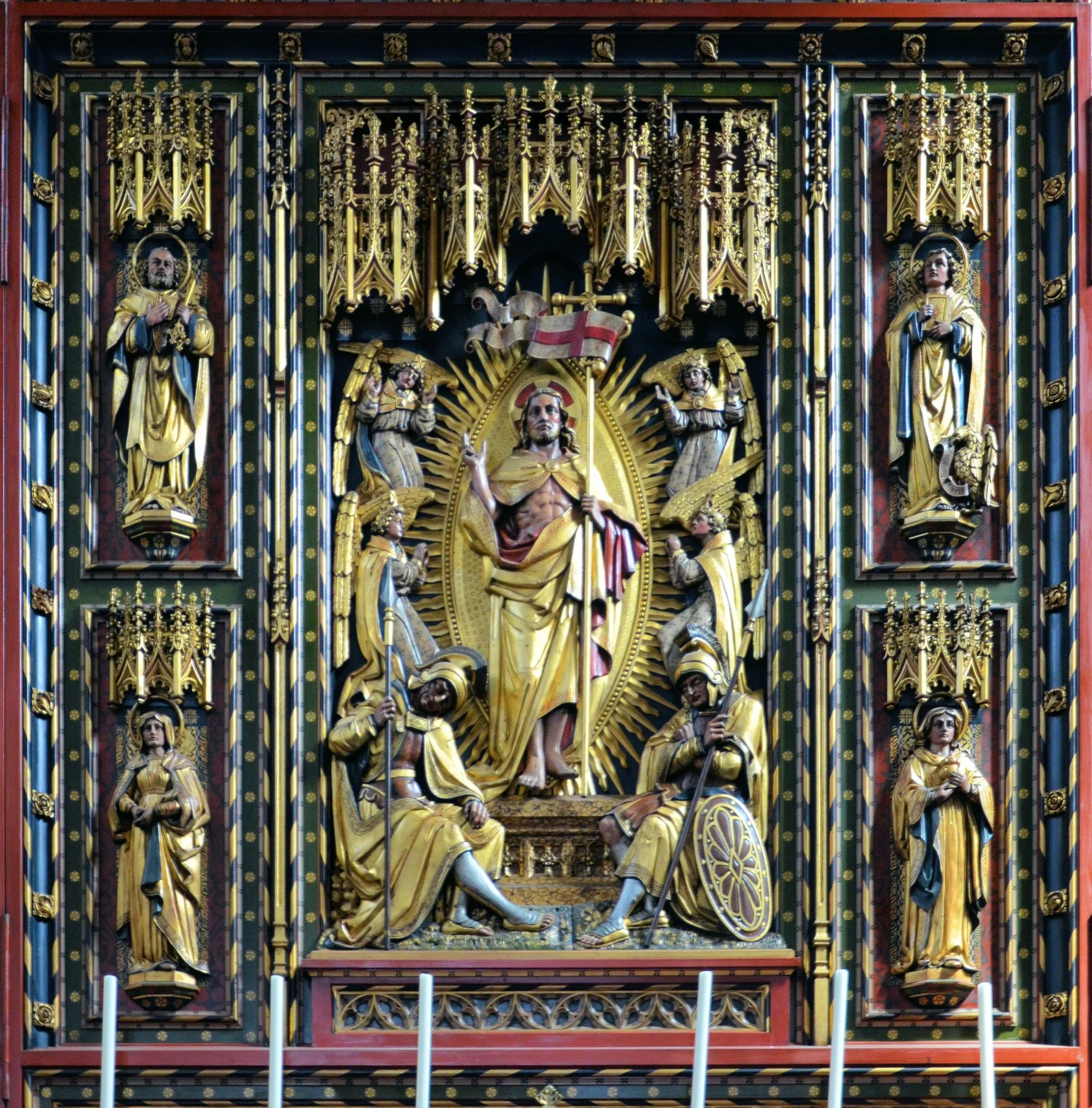
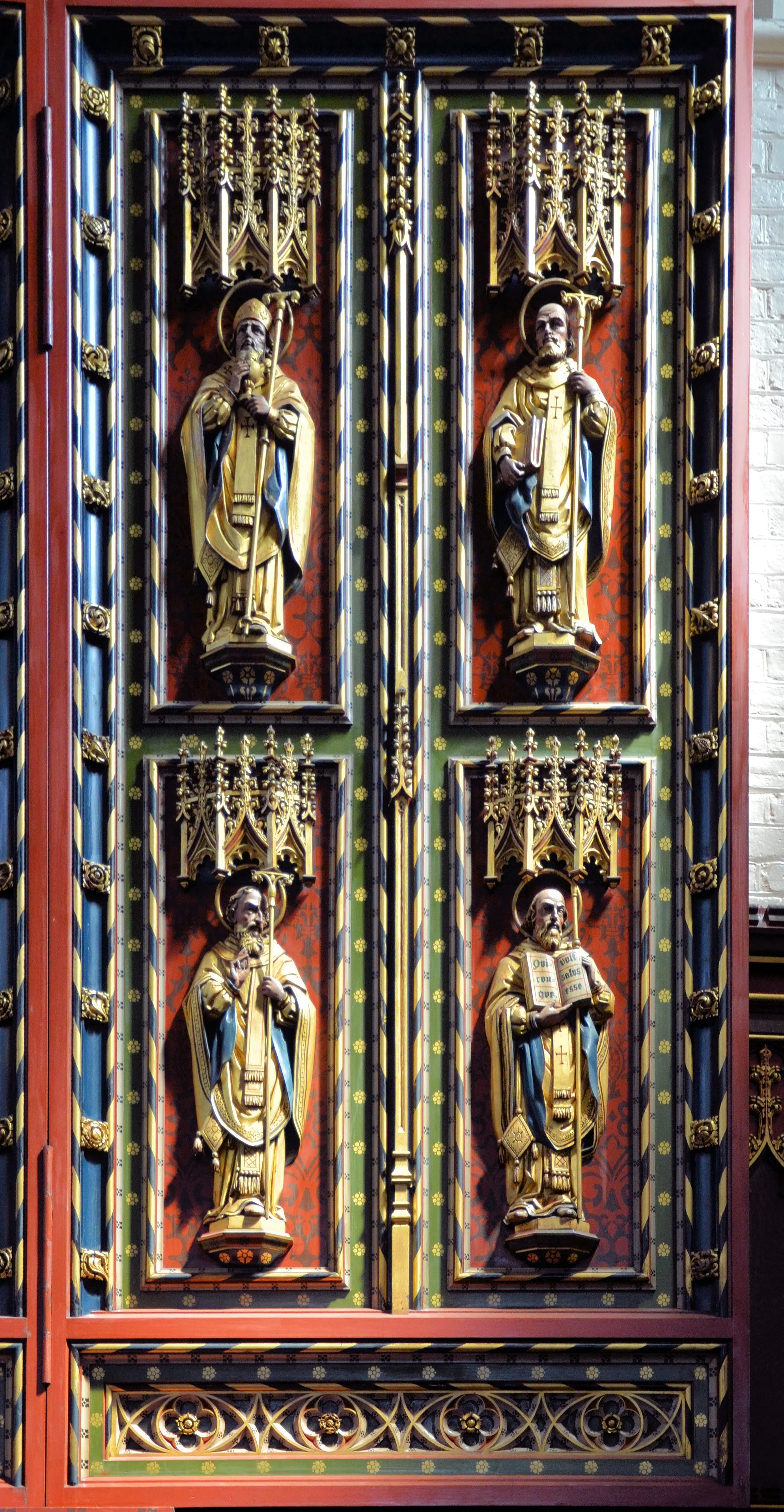
The most striking feature of St Peter’s is the great Reredos over the High Altar. A war memorial to the 1914-1918 war, it was completed by Easter 1919 and, like all later additions to the church, it is by CE Kempe. The central panel represents the Risen Lord. Two Roman soldiers sleep beneath. On the right side stand the four Greek Doctors of the Church. On the left side stand St Peter and the other Mary, with the four Latin Doctors. The memorial plaque for the Reredos has been carved into the Baptistery.
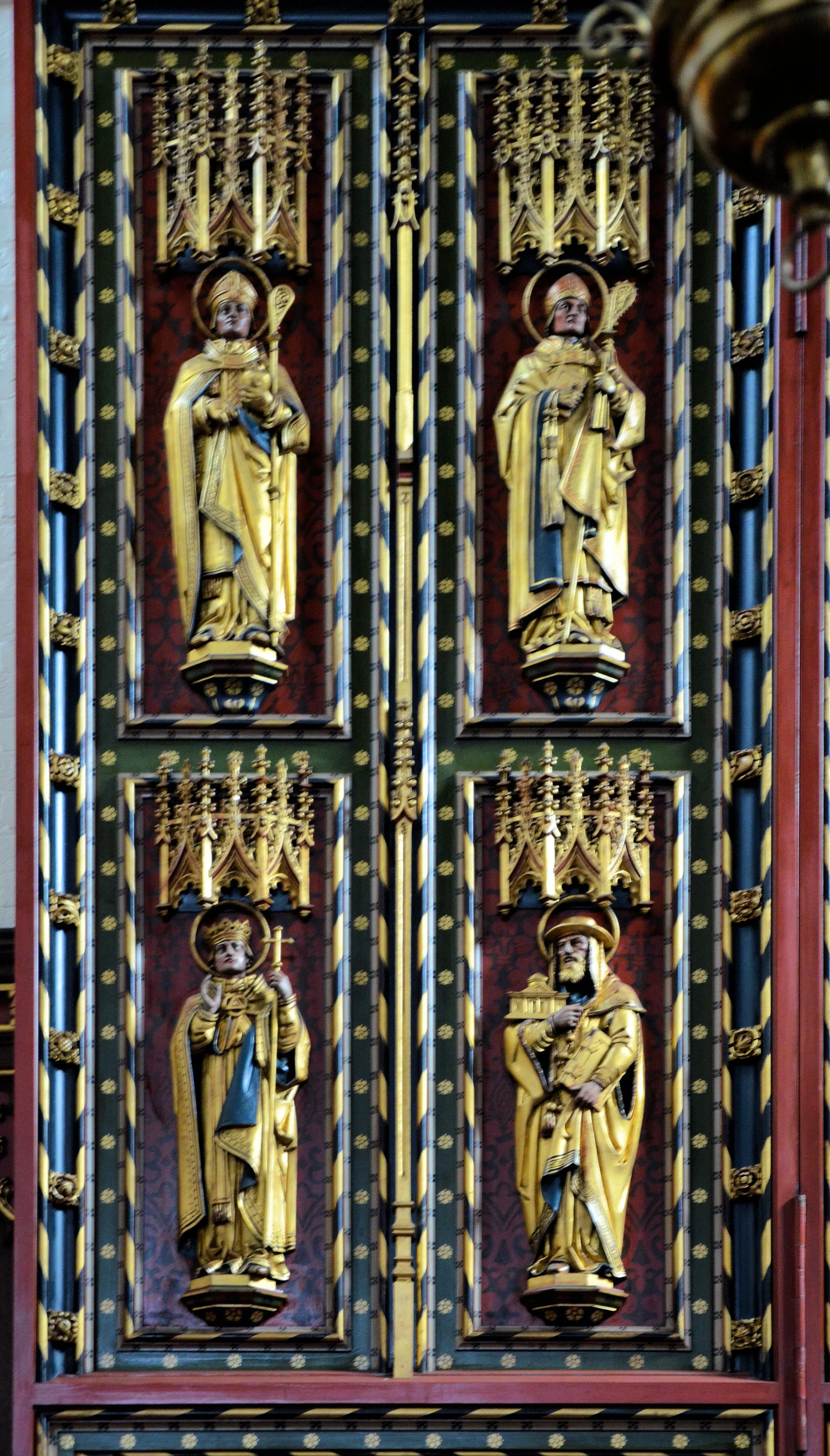
St Augustine - St Ambrose
St Gregory - St Jerome
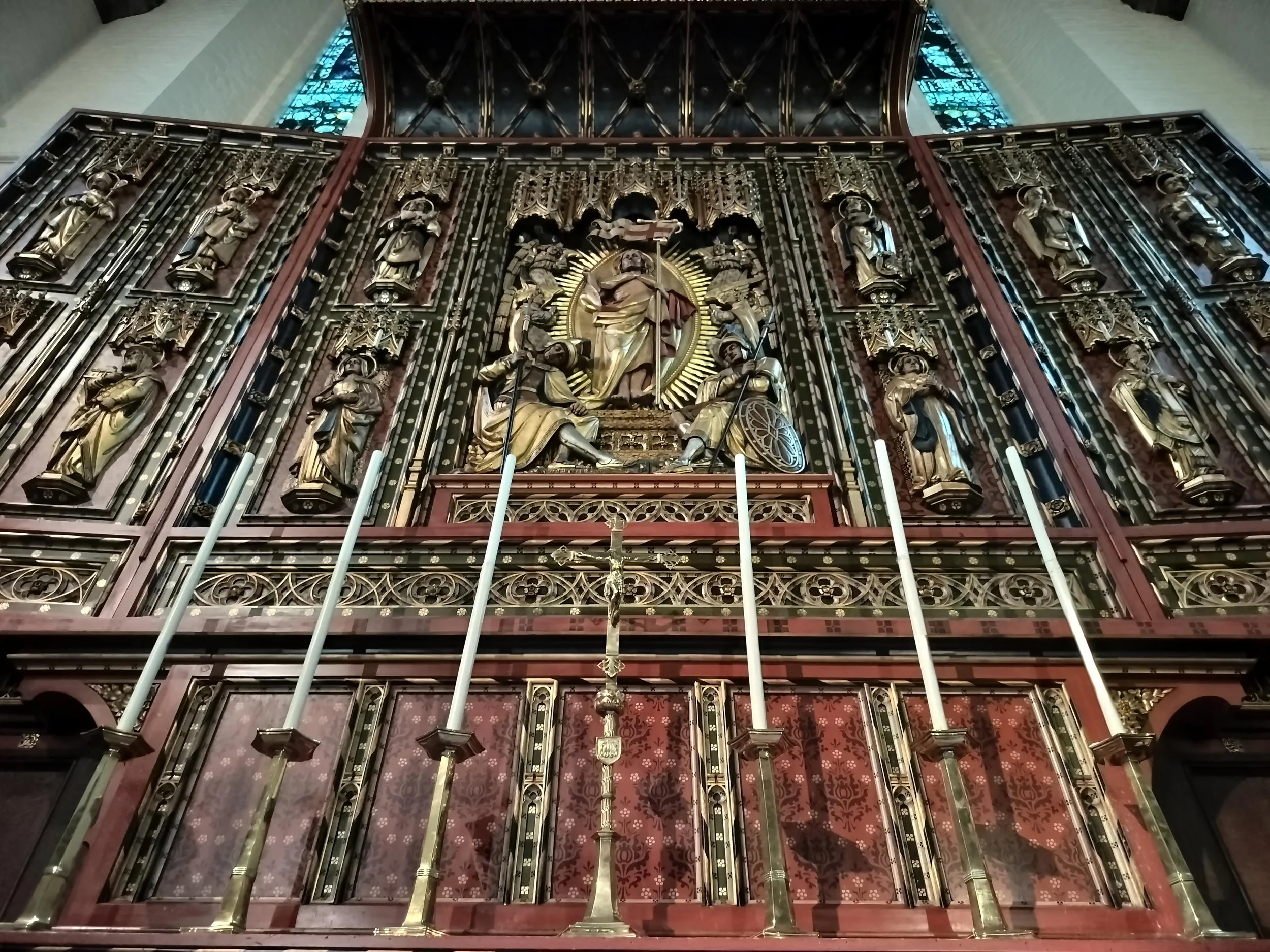
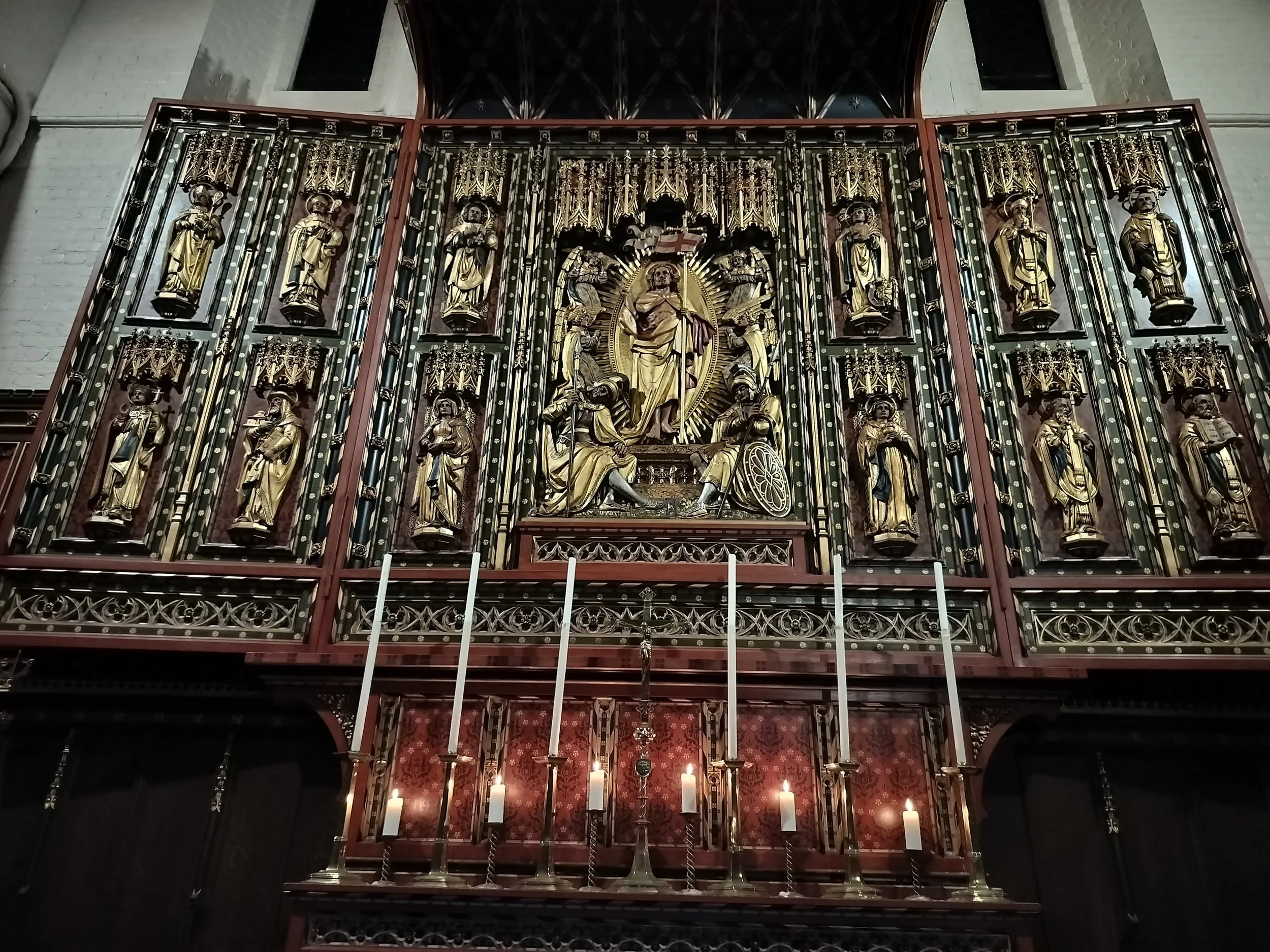
St Peter - The Resurection - St John
The Other Mary - - St Mary Magdalene
St John Chrysostom - St Basil
St Gregory Nazianzen - St Athanasius
The Nave, Baptistry and Pulpit
The next striking feature as you leave the Chapel is Calvary. One cannot help feel the overshadowing presence of the 10-foot high oak cross supporting a plaster Corpus Christi and inscription INRI. (The unstained oak portable altar and credence table were part of the “Bill” Creighton memorial.)
Moving across to the centre aisle, the Baptistry towers above. It comprises panelled back and canopy in oak with two seats and stalls on either side with brass fittings for churchwardens’s staves. The return panelling on North and South sides of the Baptistry is by Kempe. The north side contains the memorial referring to the First World War and to the erection of the Reredos.
The Pulpit and Baptistry were erected in 1913 to commemorate the completion by the Revd Noel Percival Tower of 25 years in the Priesthood.
On either side of the font are the churchwardens’s staves of oak each with brass mounts and scones.
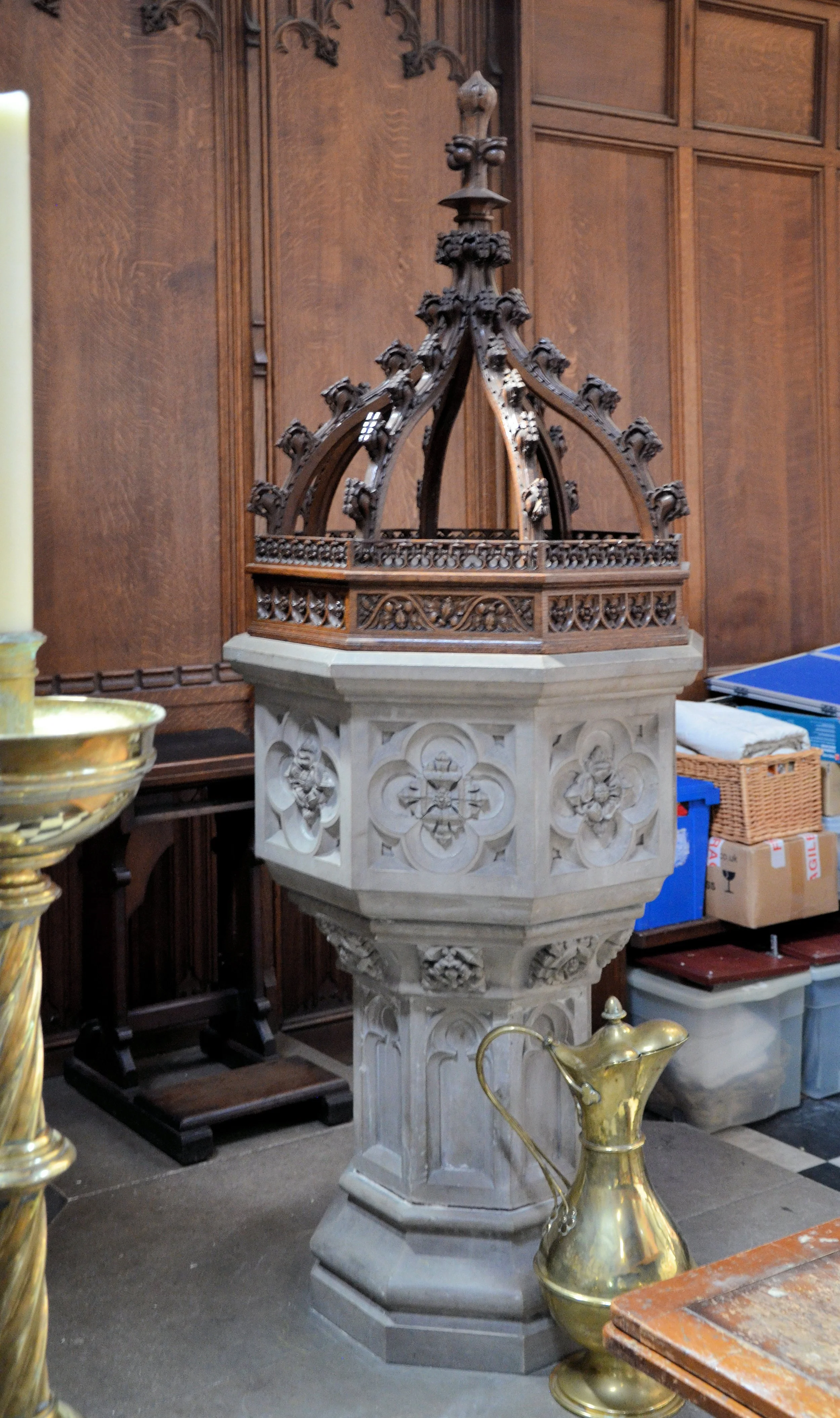
The octagonal font is Portland Stone with quatre-foil in each part of the octagonal basin surrounded in black and white marble pavement.
The font was slightly damaged a few years ago after the boiler-room beneath the floor caught fire. The font supports a richly decorated oak crown when not in use.
Windows
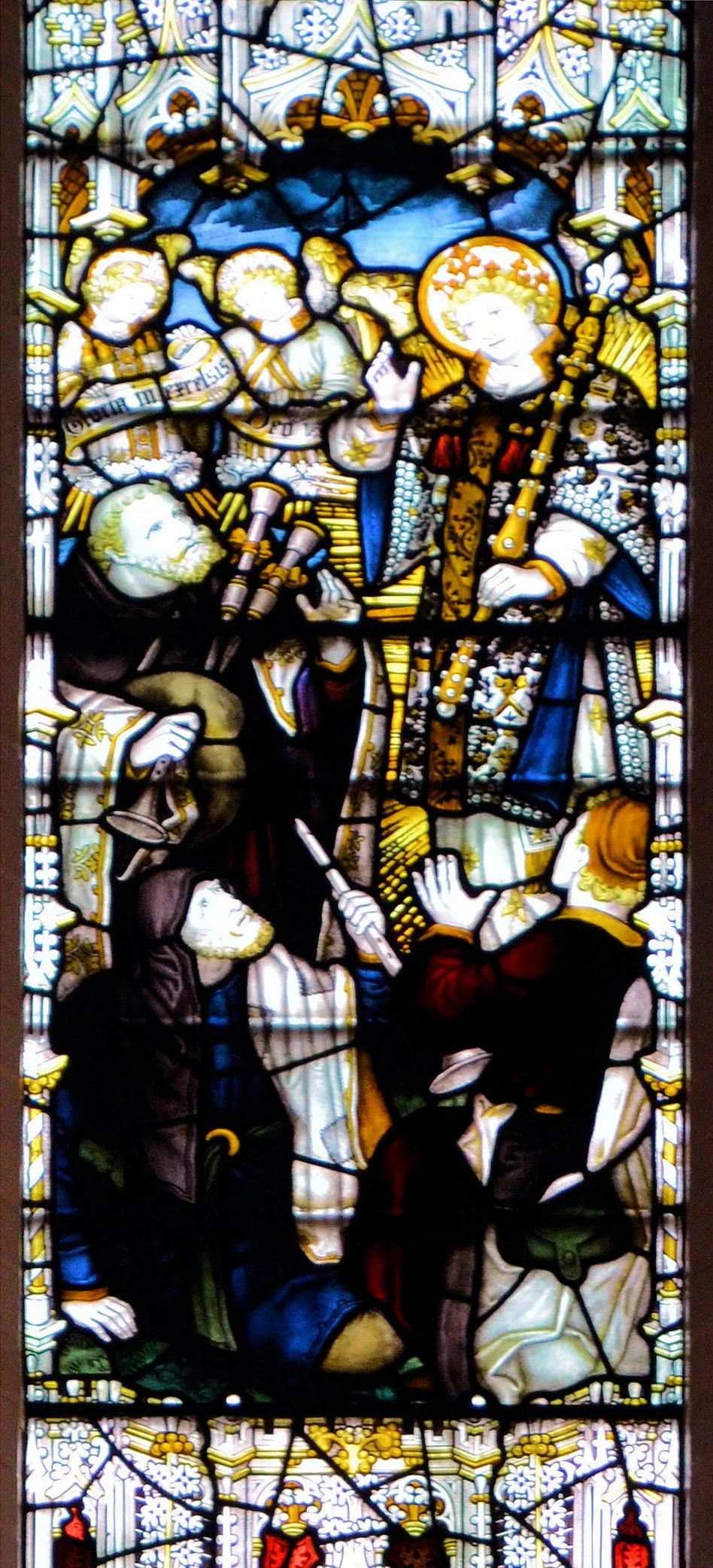
St Peter’s has a large variety of stained glass windows in the Nave, Lady Chapel, and above the High Altar. These depict various scenes from Scripture, the Saints, and the Beatitudes.
Adoration of the Shepherds
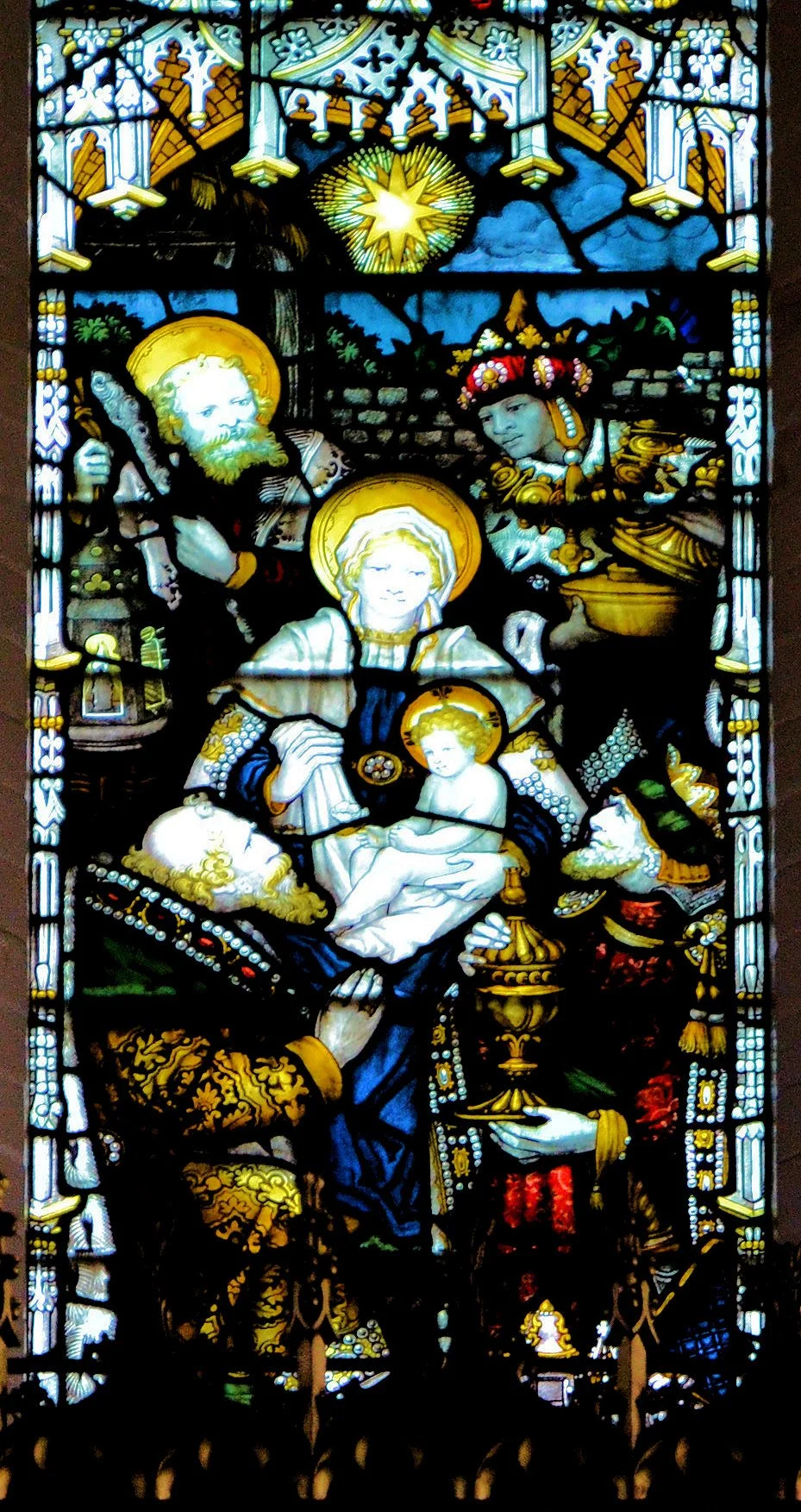
Adoration of the Magi
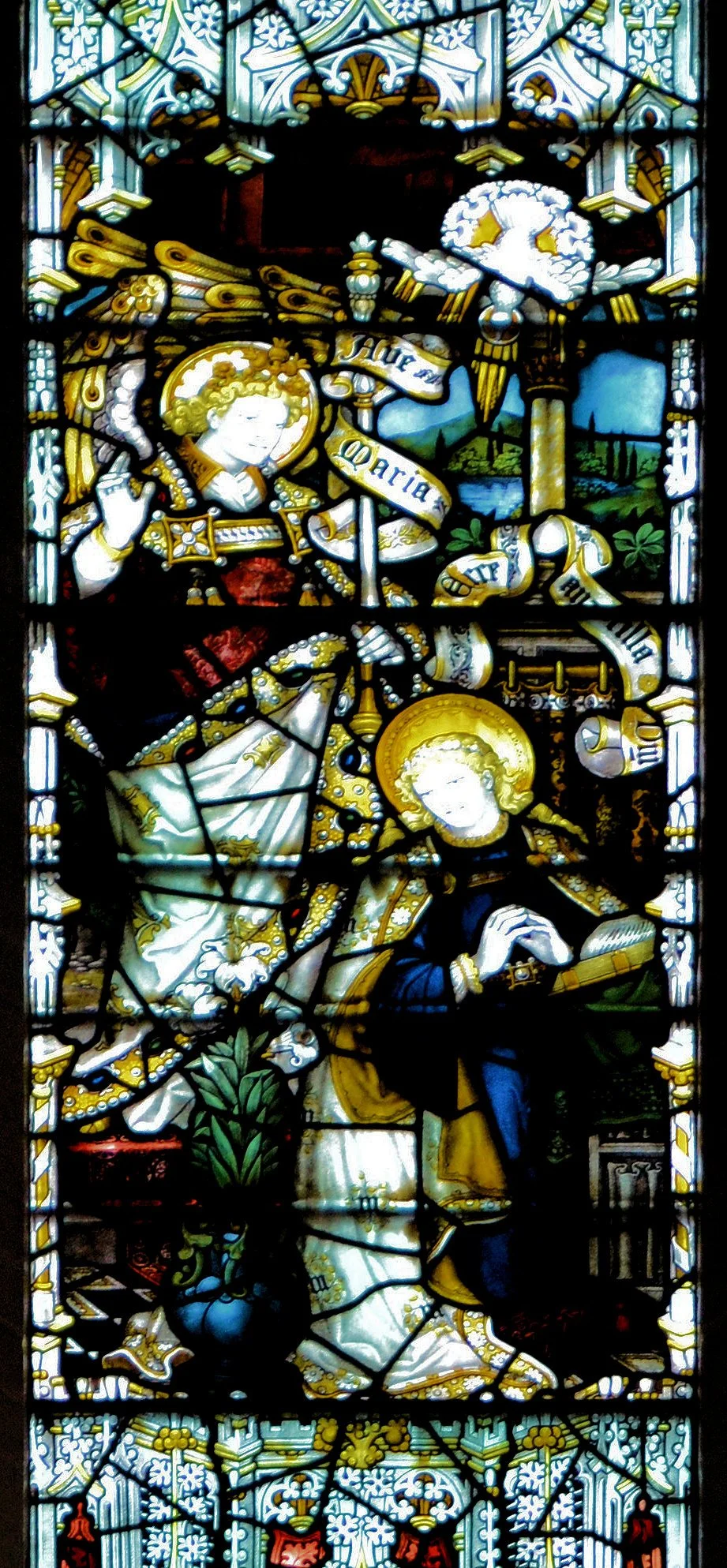
Annunciation
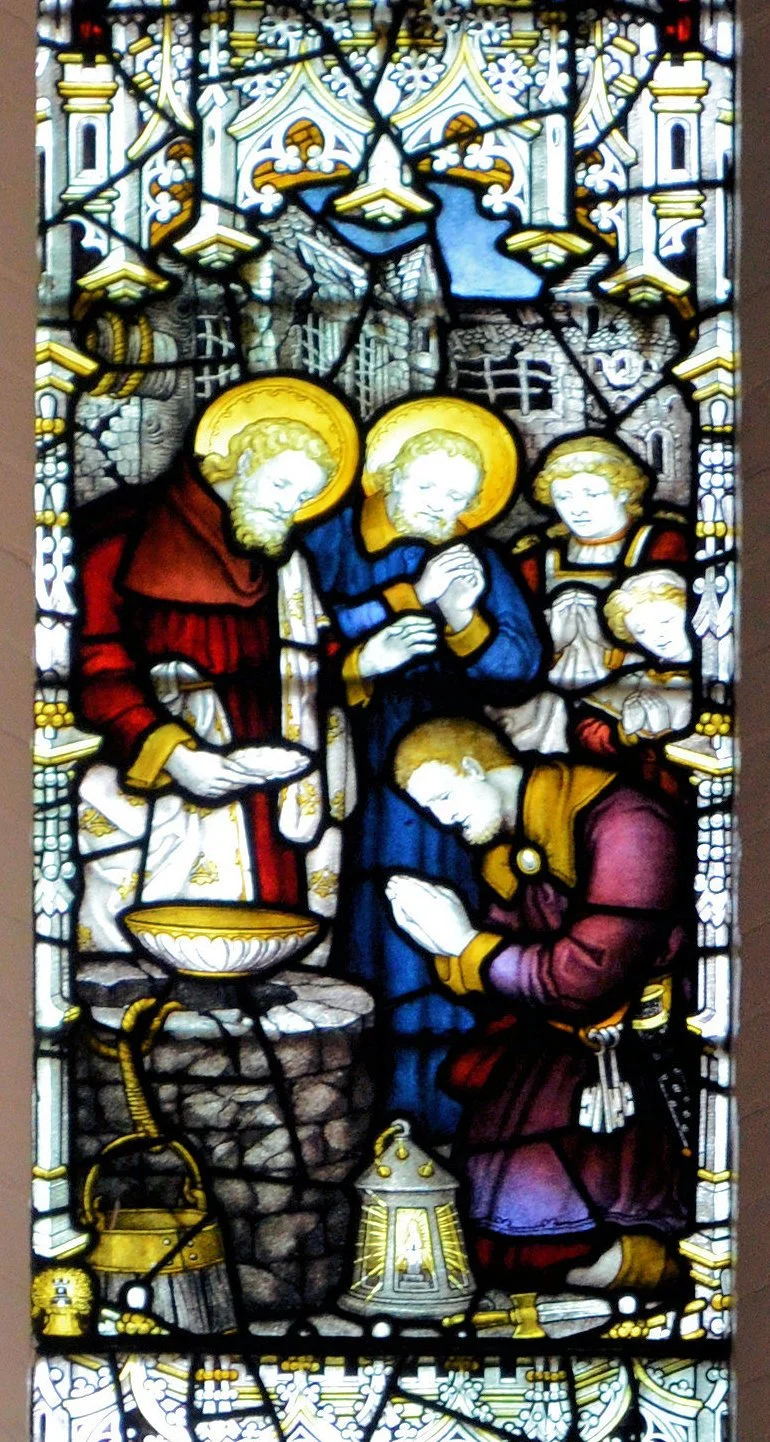
Baptism of Cornellius
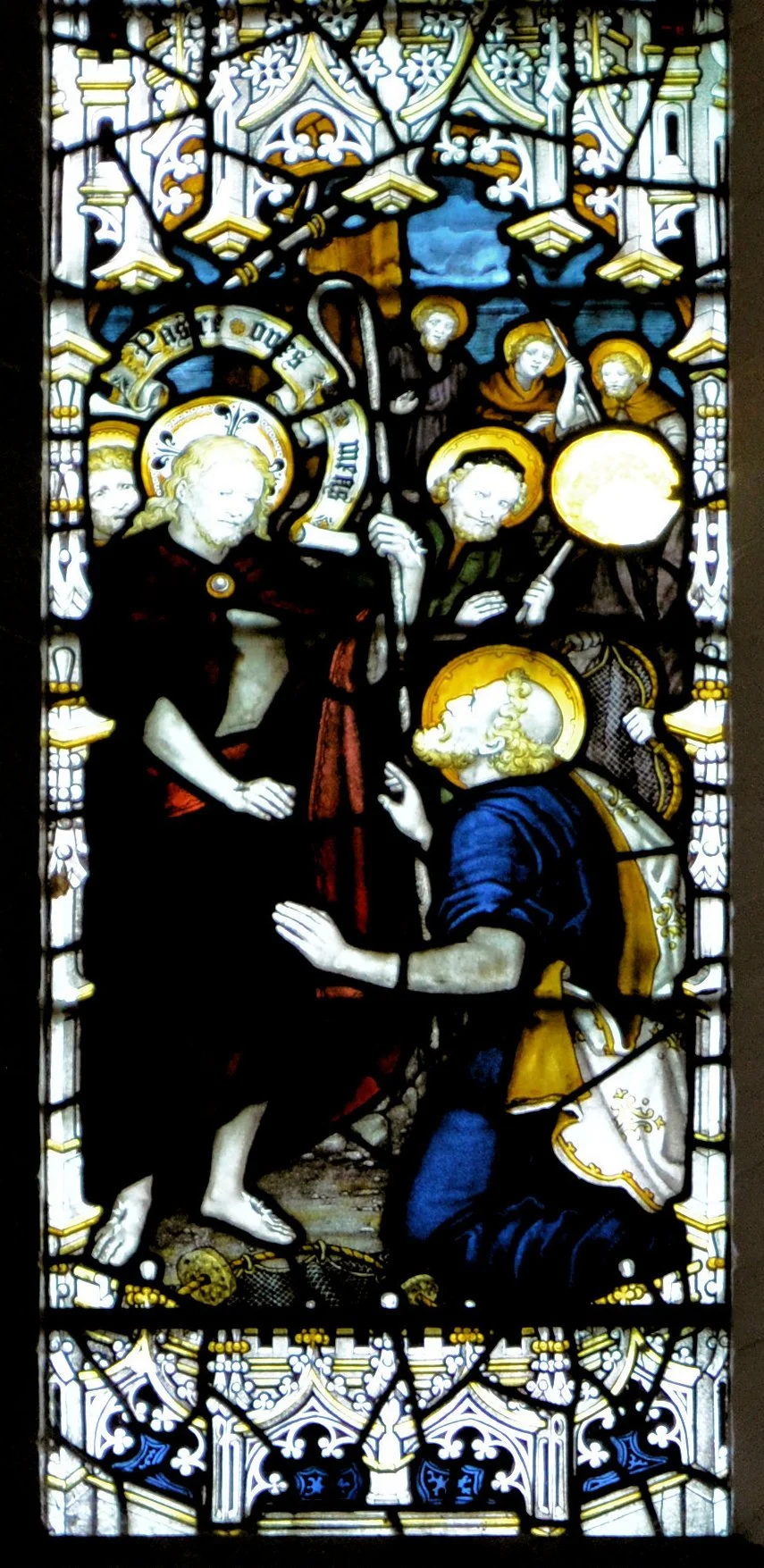
Charge to St Peter
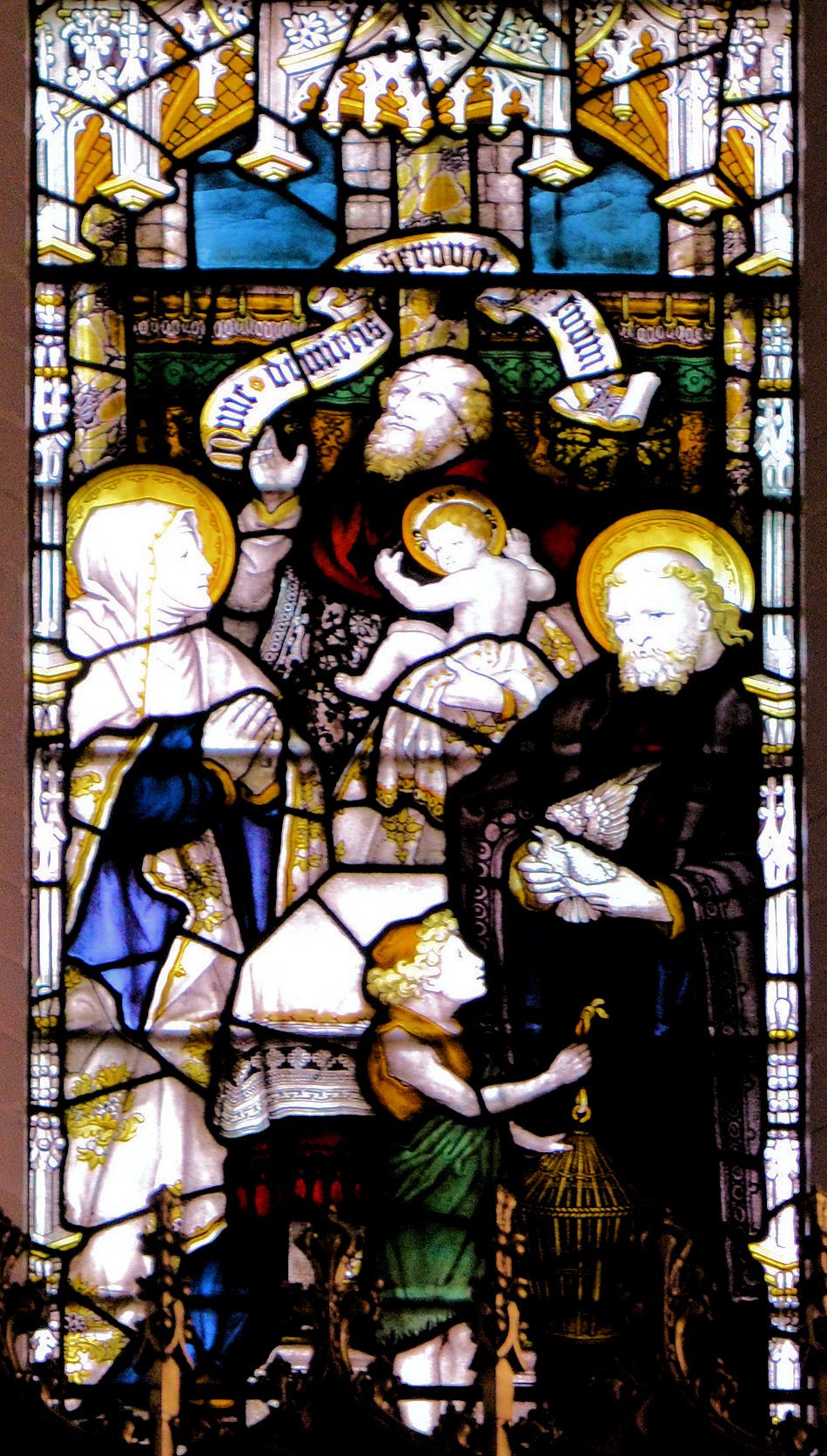
Presentation of Christ
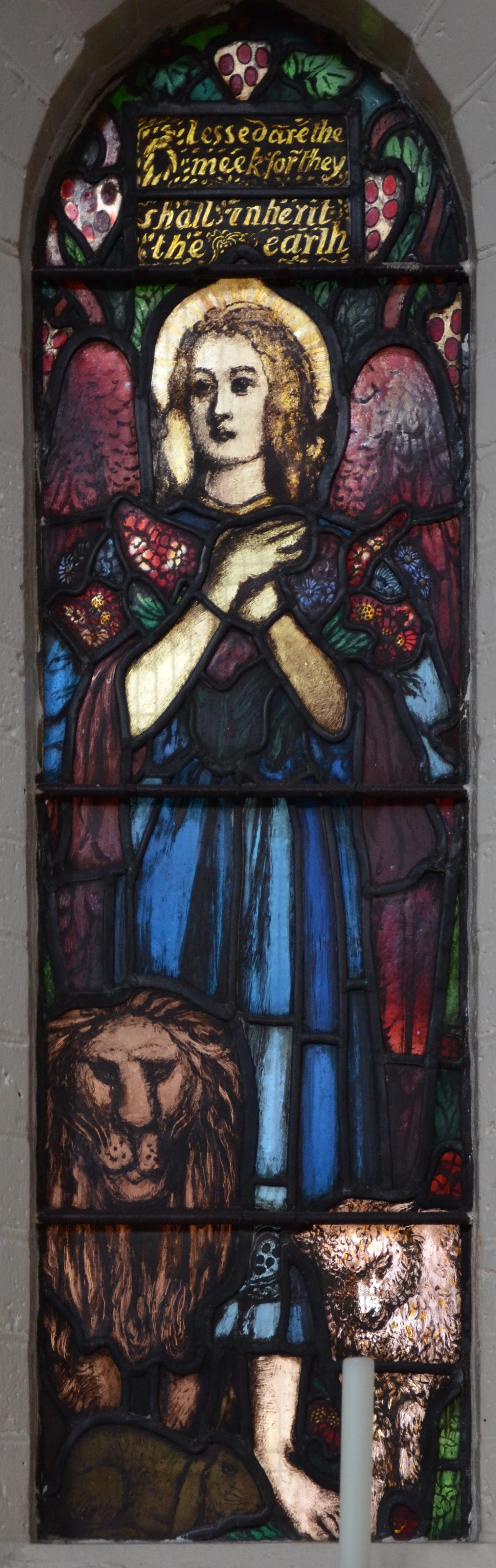
Blessed are the meek
Blessed are the meek